
2004
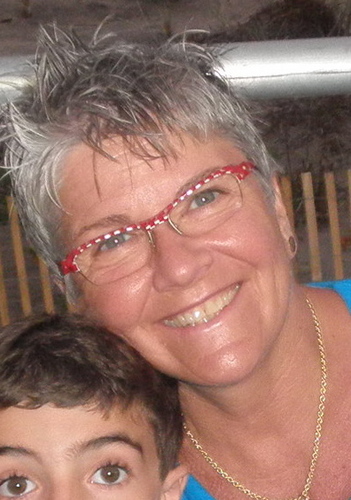
Anative of Louisville, Kentucky, Guard was a teenager when her family moved to Washington, D.C. Her father was a Senate staffer with “a deep commitment to social justice;” her mother was a concert pianist. A sociology major at Trinity College, Guard has joked that she partied harder than she studied. By the age of 30, Guard was divorced with two children, relying on food stamps to feed her family. Fortunately, she received a scholarship to Bryn Mawr College, where she earned two Master’s degrees, relating to social work and public policy.
Guard developed policy for the Pennsylvania department of welfare for five years. She had some positive influence on legislation, but (according to a profile by Philadelphia Inquirer columnist Monica Yant Kinney)“she felt disconnected from the people she wanted to help, and disgusted by the ‘egotistical, arrogant, self-important geniuses,’ with whom she dealt in Washington, who made decisions for the poor but did not seem to know or talk to them.”
In 1983, Guard began working as director of the People’s Emergency Center, which provided hot meals and shelter on the weekends to a half-dozen homeless families, at the Asbury Methodist Church in West Philadelphia. Homeless families are largely invisible to the public, since they usually live in shelters and are not panhandlers. The center serves mothers with children, as well as a smaller number of teenage girls without children. Typically, the mothers who live at the center are under twenty-one, have never held a job, read at a fourth grade level, and have been abused as children.
Guard took a tough but compassionate approach to managing the PEC. She established strict rules—no drinking, no drugs, no stealing. Residents are allowed about ten dollars out of their welfare checks for spending, and the rest must be saved for rent money when they leave. The shelter is “transitional” housing, with the expectation that residents will leave within a year. Guard’s approach is effective---90% of residents do not return to homelessness.
This firm approach is combined with Guard’s conviction that homeless persons usually require extensive social services to turn their lives around. Consequently, the center has developed many of these services, including parenting classes, job training and placement, drug and alcohol counseling, and case management by social workers. All this is expensive, but Guard argues, “You get what you pay for.”
In 1990 Guard moved the People’s Emergency Center from its cramped quarters to a spacious, renovated factory at 39th and Spring Garden streets. Two years later, Guard raised the funds to renovate 30 abandoned row houses, which were made available to homeless families at an affordable price, provided that the parent completed “life skills” and mortgage management classes, saved $3000, and held a job for 18 months. By 2010, the PEC had renovated 200 subsidized housing units near the center, and started 25 neighborhood businesses.
An exceptional fundraiser, Guard raised $125 million while heading the People’s Emergency Center, ending with a $7 million annual budget, over 90 employees, and a remarkable vision. When receiving the Philadelphia Award, Guard expressed her hope that one day Philadelphia would be “the first place in the country where all citizens can elevate themselves and prosper.”
2003
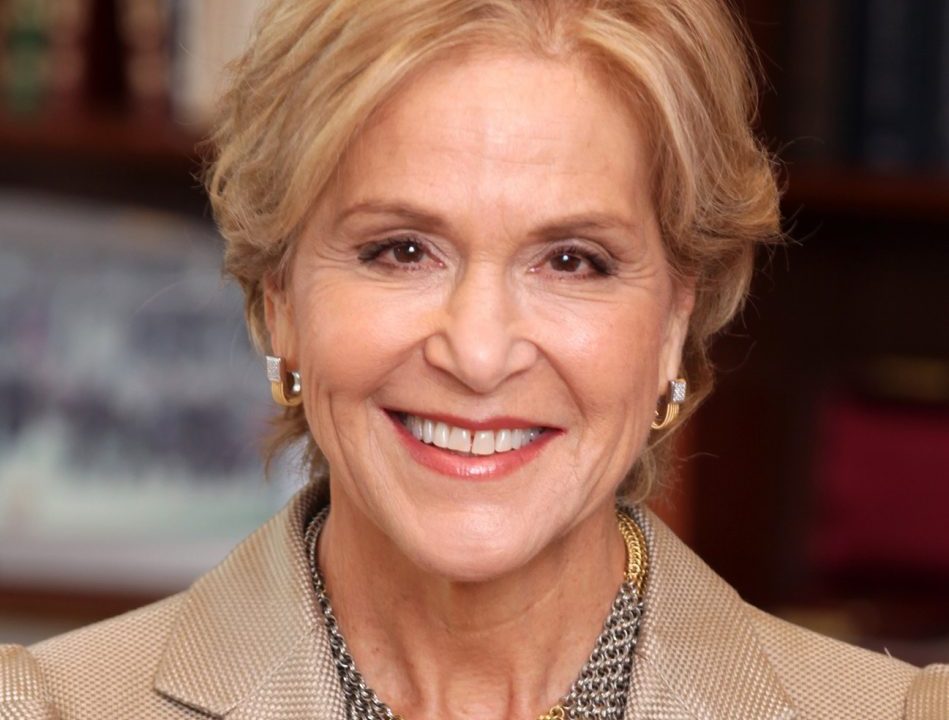
Improving the area around Penn would make that community a more desirable place for Penn faculty and students to live, enabling the continued growth of the university, while (hopefully) making it a better place for the community’s non-academic residents as well.
Raised and educated in West Philadelphia, Rodin attended Girls High School and Penn, completing a B.A. degree in psychology (1966). With a doctorate in psychology from Columbia University, Rodin began her professional career as an assistant professor of psychology at New York University. She soon transferred to Yale University where she spent the next 22 years of her career, moving from assistant professor up to chair of the Psychology Department. An award-winning researcher, Rodin was a pioneer in combining the insights of behavioral medicine and health psychology, studying obesity, eating disorders, and women’s health and aging.
Rodin was named dean of Yale’s Graduate School of Arts and Sciences (1991) and promoted to provost (1992). Her administrative experience paved the way for her move to Penn in 1994, when she became the university’s seventh president. According to Rodin, “For me, it was a question of how did I feel about Penn, and was there a strong enough attraction there for me to give up my research career and the life of a faculty member. In the end, Penn and Philadelphia trumped the other issues.”
Her belief in the synergy between Penn’s success and the success of the surrounding community resulted in the development of the West Philadelphia Initiatives (WPI), led by Rodin and the Penn community. These efforts to improve the local neighborhoods focused on housing, schools, retail revitalization, economic development, and safety and security. Streetlights were added to more than 1200 properties, and public gardens were created. Home buying increased while overall crime dropped by 33% over a four year period. Penn developed a retail complex including a bookstore, restaurant, hotel, and nearby grocery store and movie theater. Penn partnered with the Philadelphia public schools to build and operate a pre-K through 8th grade public school, as well as to improve local schools.
Leaving Penn in 2004, Rodin is the current (and first female) president of the Rockefeller Foundation, founded in 1913 to “promote the wellbeing of humanity around the world.” In 2010, the foundation, in coordination with a bipartisan coalition of mayors from across the country, funded a two year, $200,000 grant for an administrator to coordinate city volunteers in Philadelphia. Rodin said, “[Current] Mayor [Michael] Nutter has always been guided by a deep understanding that community involvement can change neighborhoods [and] cities.” Rodin’s commitment to community, evidenced in the WPI improvements and numerous other initiatives throughout her career, continues unabated.
In 1990 Guard moved the People’s Emergency Center from its cramped quarters to a spacious, renovated factory at 39th and Spring Garden streets. Two years later, Guard raised the funds to renovate 30 abandoned row houses, which were made available to homeless families at an affordable price, provided that the parent completed “life skills” and mortgage management classes, saved $3000, and held a job for 18 months. By 2010, the PEC had renovated 200 subsidized housing units near the center, and started 25 neighborhood businesses.
An exceptional fundraiser, Guard raised $125 million while heading the People’s Emergency Center, ending with a $7 million annual budget, over 90 employees, and a remarkable vision. When receiving the Philadelphia Award, Guard expressed her hope that one day Philadelphia would be “the first place in the country where all citizens can elevate themselves and prosper.”
2002
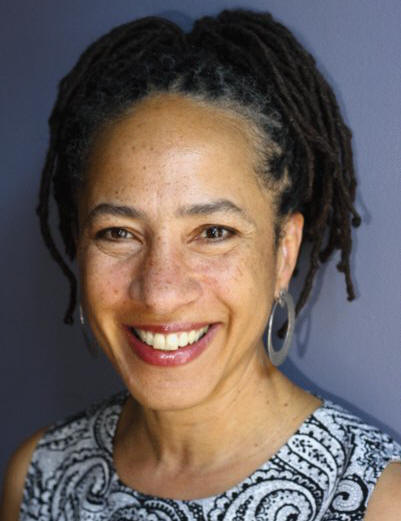
Cary was raised in Yeadon, Pennsylvania, a predominantly black middle class suburb of Philadelphia. Her father taught science at a local junior high school and her mother worked as a beautician. In 1972, Cary was accepted to St. Paul’s School in Concord, New Hampshire, a formerly all-boys boarding school. She was one of fewer than a dozen black girls in a school of approximately 500 students. Cary then earned bachelor’s and master’s degrees in English from the University of Pennsylvania and a second master’s degree in Victorian literature and religion from Sussex University in England.
Throughout her education, Cary struggled to hold on to her African American identity and succeed in a white-dominated academic world. In her memoir, Black Ice (1991), she describes her experiences at St. Paul’s School. Cary writes profoundly about race, the meaning of race, and of its making. Literary critic Arnold Rampersad declared it, “probably the most beautifully written and moving African American autobiographical narrative since Maya Angelou’s celebrated I Know Why The Caged Bird Sings.”
Cary’s first novel, The Price of a Child (1995), set in pre-Civil War Philadelphia, tells the remarkable story of an enslaved woman who escaped to freedom but had to leave behind her child. The text engages constitutional issues in the historical context of abolitionism and the Underground Railroad. Cary stated that the book “is the kernel of the American story. It’s another way of looking at who we are as Americans.” The result of more than three years of research, The Price of a Child was very well received critically. With this contribution to American literature, Cary aligned herself with a new genre led principally by African American women writers—the neo-slave narrative which re-imagines black women in American history regarding their disenfranchisement and disembodiment.
Mayor Street and his committee selected The Price of a Child as the first book for the One Book, One Philadelphia program based upon its quality, Philadelphia-based historical references, and its mass-appeal. In response, Cary said, “I’m grateful to the city for choosing a book that is not all safe.” To discuss the book, Cary met with Philadelphians in over 45 meetings and classes. Street declared that Cary is “more than a writer. She’s a role model.”
Cary’s third book, Pride (1998), is a contemporary tale about four black women who have been friends since childhood, which was praised in the New York Times for creating "subtle, idiosyncratic characters whose personalities seem utterly and affectingly distinctive."
Cary has become “a force for literacy” through education, arts, and culture, especially within the African American community. In 1998, Cary founded Art Sanctuary, which brings the work of established and aspiring African American artists to inner city residents. Meeting (most frequently) at the Church of the Advocate in North Philadelphia, Art Sanctuary engages a struggling community – half of the neighborhood’s adults and two-thirds of the children live in poverty. The organization hosts 10 to 12 major artistic events annually with notable authors, poets, historians, musicians, filmmakers, photographers, and dancers. Art Sanctuary also holds classes, including in drama, poetry, dance, and drumming.
2001
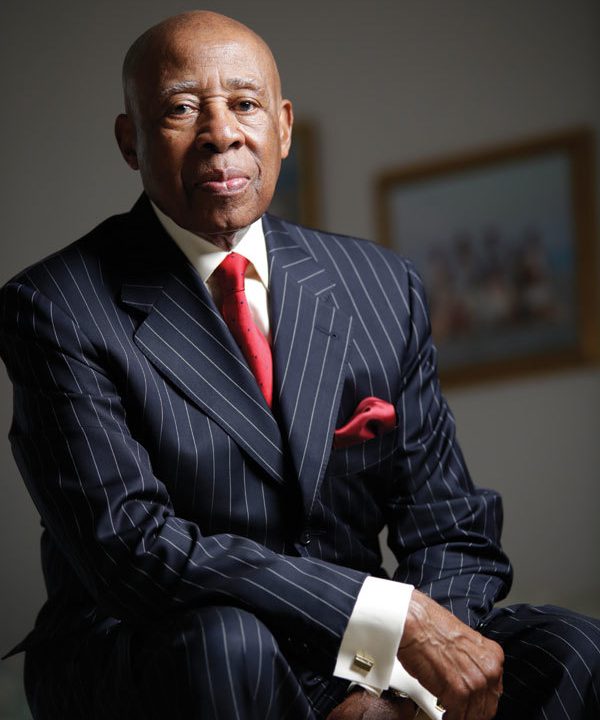
Watson was born in Gary, Indiana where his father had moved the family to work in a steel mill, a good job for a man with only a few years of schooling. In contrast, his mother, who had taught high school, was a college graduate who came from a family where education was prized. She passed on her love of learning to her son, who earned a bachelor’s degree in History and Political Science at Indiana University (1951), a master’s degree in Educational Administration at the University of Illinois (1955), and a doctorate in Educational Administration and Sociology at the University of Chicago (1967). However, even with scholarships, Watson had to work full-time in a steel mill for nearly two years and serve in the United States Air Force during the Korean War to afford his education.
In 1967 Watson accepted a job with the School District of Philadelphia for the opportunity to work with school board chairman and reformer Richardson Dilworth. The following year Watson rose to the position of deputy superintendent for planning. In 1970 he was hired as a professor and chair of the Department of Urban Education at Temple University. In 1976 Watson became the university’s first African American vice president, but continued to teach every semester. During this period Watson was active in the Black Political Forum, leading training sessions aimed at increasing African American participation in the political process.
In 1981 Watson became president and chief executive officer of the William Penn Foundation where he administered the distribution of $278 million to support its mission of “improving the quality of life in the Greater Philadelphia region.” During his time at William Penn, Watson supported the creation of the Avenue of the Arts, the redevelopment of the Cecil B. Moore corridor opposite Temple University, and an increase of the minority presence in higher education.
After retiring from William Penn in 1993, Watson has remained an active figure. As board chairman of the Avenue of the Arts, Watson saw his earlier vision come to fruition. He has been a leading figure in the expansion of the Convention Center. His most public role, however, has been as board chairman of the Barnes Foundation. He garnered considerable media attention for his controversial push to relocate that institution to the Benjamin Franklin Parkway, a decision Watson had to defend in court where he faced a suit brought by three Barnes art students. Watson maintained that a move to Philadelphia was the only viable long-term strategy to keep the institution intact.
Watson was awarded the Philadelphia Award in 2001 for what WHYY President William Marrazzo described as “steadfast leadership, involved citizenship and a lifetime of community work.” Marrazzo went on to state, “He has been a tireless fighter of ignorance and injustice, a determined advocate for educational excellence, and an energetic supporter of the arts. He is truly one of Philadelphia’s treasures.”
Reflecting on his beliefs, Watson wrote in his memoir, “As I look back over my life and try to ascertain its major themes, I believe I can identify two: my confidence in the power of education to transform individual lives and even society itself, and my hatred of injustice in all its forms, but especially racism,” (from Colored, Negro, Black: Chasing the American Dream (1997).
2000

As she later expressed it, Ballard grew tired of just being somebody’s wife and somebody’s mother; she wanted to be somebody in her own right. In 1954 she graduated from the Pennsylvania School of Horticulture for Women and established her own horticulture business, Valley Gardens. She wrote two popular books on plants, The Art of Training Plants (1962) and Garden in Your House (1971), and hosted radio shows that gave gardening tips.
In 1964 Ballard closed her gardening business to become the director of the Pennsylvania Horticultural Society. The organization had an annual budget of $70,000 and four employees. The Philadelphia Flower Show was floundering and the group of nurserymen who ran the show had decided to cancel it for two years. Ballard believed that the public would lose interest in the Flower Show if Philadelphia were without it for that long, so she persuaded the Horticultural Society’s Council to prevent cancellation and stage the show in 1965. In 1968 the horticultural society became the official producer of the Flower Show. Ballard was the chief organizer of the ever expanding annual event, which she made “much more participatory” and educational in nature. Under Ballard’s leadership from 1964 to 1980, the Pennsylvania Horticultural Society became a thriving organization with over 30 staff members, and the Philadelphia Flower Show grew to become the largest and finest indoor flower show in the United States.
As the proceeds from the Flower Show grew, Ballard started the Horticultural Society’s community gardening program, Philadelphia Green, which under her watch became one of the largest urban greening programs in the country. Philadelphia Green works with hundreds of community gardening groups to replace trash-filled vacant lots with vegetable gardens, plant trees and flowers, and maintain neighborhood parks. “The whole concept that greening can do a lot for a community—that is Ernesta,” remarked Jane Pepper, who became head of the horticultural society in 1981. Ballard became a member of the Fairmount Park Commission (1982-2002), where she worked for the preservation of historic houses and spearheaded the fundraising drives for the restoration of the Philadelphia Water Works and the Swann Fountain at Logan Square.
Ballard was also known as the “godmother of Philadelphia feminism.” In 1967 she founded the Philadelphia chapter of the National Organization for Women. Ballard fought for equal pay for women. She raised money, marched, lobbied, and campaigned in support of the Equal Rights Amendment. Although she was a Republican, Ballard worked for candidates of either party who supported women’s issues. In 1977 she co-founded and became chairwoman of the board of Women’s Way, the country’s oldest and largest women’s fund-raising organization, which supports an array of women’s causes including wage equity, support for victims of domestic violence, and reproductive rights. Ballard was a founder of the National Abortion Rights Action League, and was its chairwoman from 1989 to 1991.
In a 1976 speech, Ballard declared that women should “renounce their dependent status and declare their liberty.” Today’s feminists “have rejected gradualism and gone back to first principles, the principle that all human beings are created equal – equal in opportunity and equal in expectation.”
1999
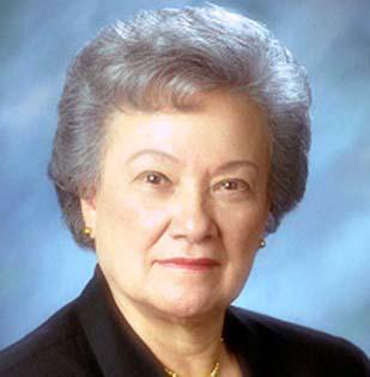
Yep entered public life in 1966 when the Pennsylvania Department of Transportation proposed the expansion of the Vine Street Expressway. She led a committee formed to oppose the project, which would have fragmented the neighborhood, displaced residents (including Yep), and demolished Holy Redeemer, which had become “a focal point in a lot of our lives,” noted Yep, a widow with three children.
She stood her ground at her home at 832 Race Street. As the project moved forward, the inhabitants of her block eventually abandoned their homes, but she and her children remained in their house as mounds of earth piled around it. Yep stayed even after the construction broke her furnace flue and nearly asphyxiated her family. She called it, “The Alamo of Chinatown.” Young people climbed on piles of rubble, stopping bulldozers. Yep and her supporters lobbied politicians and demonstrated against the project. Although ultimately Yep was displaced from her home, the battle was won (in large part) when the city and Penn DOT redesigned the Vine Street project to spare Holy Redeemer, installed noise-reducing walls along the expressway, and abandoned plans for a 9th Street ramp.
The committee was incorporated in 1969 as the Philadelphia Chinatown Development Corporation (PCDC), a nonprofit, grassroots organization that promotes Chinatown as a “viable ethnic residential and commercial community.” Yep was named its executive director in 1974.
The threat to Chinatown did not end at Vine Street. Yep and the PCDC lobbied and protested against other projects encroaching upon Chinatown, including the development of Market Street East, Gallery I and II, a new commuter terminal, and the Convention Center. They were able to significantly lessen the negative impact of six public projects, and successfully blocked the construction of a new bus terminal and the conversion of a warehouse into a federal prison. Still, residents were displaced, the community was boxed in, and rising real estate prices made the community unaffordable for many Chinese.
Yep and the PCDC helped save Chinatown by sponsoring the building of five housing developments there, comprising 216 residential and 22 commercial units, known as Mei Wah Yuen (Beautiful Chinese Homes), Wing Wah Yuen (Dynasty Court), Gim San Plaza (Gold Mountain), On Lok House (Peace and Harmony), and Hing Wah Yuen (Prosperous Chinese Garden). The last-mentioned consists of 51 affordable housing units for first time buyers on the north side of Vine Street.
Yep received the 1999 Philadelphia Award for her work representing, preserving, and protecting the Chinatown community. In 2000 Yep resigned as executive director. As PCDC director, she had not only rescued Chinatown from outside threats during her lifetime, but also saved the neighborhood for future generations by initiating the passage of a bill in 1999 that established Chinatown as a Special Zoning District. This law rezoned 44 acres of underutilized land north of Vine Street and across from Chinatown, allowing for the community’s expansion. Yep also left an indelible mark on the neighborhood by negotiating to bring the magnificent China Friendship Gate (completed in 1983) that serves as the gateway into Chinatown at 10th and Arch streets.
1998
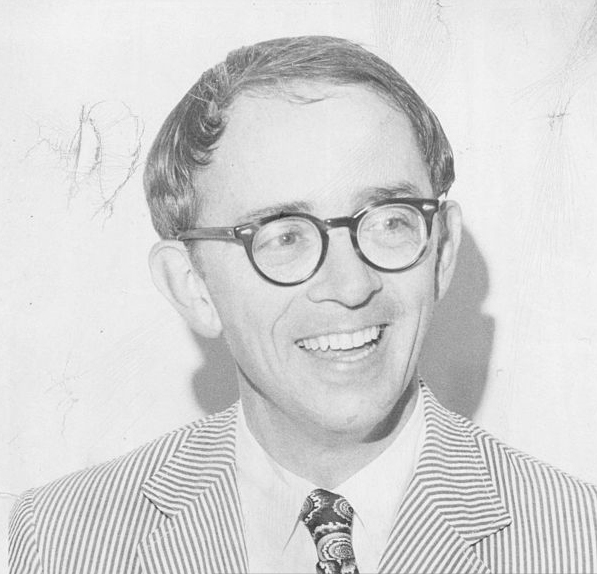
Finney was born in Greenwich, Connecticut, and attended school there. He received an undergraduate degree from Yale University (1952) and a master’s degree in public administration from Harvard University (1954). He worked in city planning in Portland, Maine, and in Boston, before becoming the second-ranking member of the Philadelphia Planning Commission (1961-1966).
As deputy superintendent for planning and later deputy superintendent for the School District of Philadelphia (1966-1969), Finney brought attention to the decades of neglect of the public schools. By the time he left, the school district had implemented a massive building program, providing for 25 new schools and the expansion of numerous others. Finney’s ability to bring people to consensus was a major factor in Philadelphia being the only city in the United States to pass three consecutive school bond issues.
After a stint as commissioner of the Addiction Services Agency in New York City, Finney returned to the city in 1973, to be the managing director of the Greater Philadelphia Partnership, a business-led civic group. In 1977, Finney founded and became president of the Corporation for Public/Private Ventures, a national non-profit research and development organization, which deals with issues of unemployment, social services, and economic development. The organization directed two nationwide projects for the U.S. Department of Labor, building public and foundation support for the development of national programs to prepare at-risk youth for employment.
In 1980, Finney founded the Conservation Company, a consulting firm that he headed as chief executive officer until 1997. The firm assisted tens of thousands of low income Philadelphians to maintain heat, water, and light in their homes by creating a mechanism for utility providers to resolve customers’ unpaid bills, while instituting conservation practices that reduced consumption when costs were escalating. The program became a model for cities across the nation.
As chairman of the City Planning Commission (1983-1988), Finney steered the city through the complex process of removing the height limit barring buildings taller than the William Penn statue, enabling Center City to expand commercially. He spearheaded the creation of long-range plans for Center City and North Philadelphia.
During this period Finney often clashed with City Council over budgetary priorities. In Finney’s view, the maintenance of existing buildings (especially the deteriorating city hall tower) and repair of the city’s decaying infrastructure were priorities that City Council was neglecting. His call apparently was partly heeded—a renovation and beautification of City Hall undertaken in 1988 led to a substantial restoration of the historic building.
In 1988, Finney cofounded the 21st Century League to influence Philadelphia’s long-term future. During the 1990s Finney and the league accomplished much, including setting up the Delaware Valley Mortgage Plan, facilitating 763 million dollars in mortgage loans to low and moderate income home buyers; coordinating the implementation of an immunization campaign that served approximately 6,000 disadvantaged children in a single month, becoming a model for the city; and through an informational campaign helping thousands of working poor families receive an average of $850 each by taking advantage of the federal earned income tax credit.
“Graham has spent his entire career creating institutions or programs of value to society at large and Philadelphia in particular,” remarked Nelson Harris, former CEO of the Tasty Baking Co.
1997
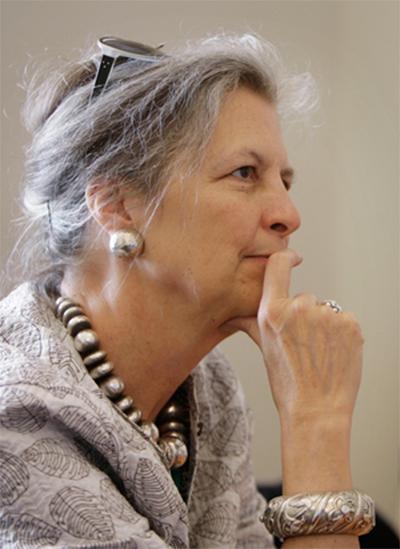
She gained experience working at the Tate Gallery in London, while earning a Master’s degree in art history at the Courtauld Institute of Arts. In 1967 she was hired as a curatorial assistant at the Philadelphia Museum of Art (PMA).
Five years later, d’Harnoncourt was appointed curator of modern art at PMA, after working as assistant and associate curator of modern art at the Art Institute of Chicago and at the PMA, respectively. A specialist on Marcel Duchamp, she co-organized a 1973 retrospective on his work, which then traveled to the Museum of Modern Art and the Art Institute of Chicago. D’Harnoncourt created special rooms displaying the work of Duchamp and the sculptor Constantin Brancusi. As curator, and later as director, d’Harnoncourt acquired numerous works of contemporary art, bolstering a weak area in the museum’s collections. Her “enormous charm and warmth” helped her build close relationships with several contemporary artists, including Jasper Johns and Ellsworth Kelly.
In 1982 d’Harnoncourt was appointed director of the museum, while Robert Montgomery Scott was named president and chief executive officer, in charge of administration and finance. The task before D’Harnoncourt and Scott was to revive a once great museum now in dire straits—with attendance at less than half of its peak year of 1970; reduced public hours and most galleries closed more often than open; a yawning budget deficit of $800,000 and a depleted endowment; a divided, demoralized board; reduced staffing and a disgruntled guard force; and a much heralded air-conditioning and humidity control system that had caused substantial damage due to leaks and flooding. Her appointment was greeted with enthusiasm by many board members and staff, although tongues wagged that she would be her husband’s boss—Joseph Rishel, curator of European painting before 1900.
D’Harnoncourt and Scott ran the museum together until 1996, when Scott resigned and she assumed the position of chief executive officer. The two got along reasonably well, although she had a way of taking charge without being impolite about it. His greatest concern was the bottom line, although both of them agreed that the museum needed to reach out and engage Philadelphians. As director and CEO, d’Harnoncourt was the only woman to head an art museum in the US with a budget over $25 million. Under d’Harnoncourt and Scott, and then under d’Harnoncourt until her sudden death in 2008, the museum experienced a dramatic rebirth.
Annual attendance increased from 400,000 in 1980 to roughly one million in 2008, while the price of admission rose sharply (although first Sundays remained free). The museum’s fiscal situation, including its endowment, went from anemic to robust, even though the city cut its funding to the museum by about 50%. The museum’s 200 galleries were open for perusal, and many had been renovated. Educational programs and community outreach were much expanded, including a partnership with the Mural Arts Program.
D’Harnoncourt hired ambitious, creative curators and put them in charge rather than the marketing department, resulting in numerous, well-researched, sophisticated exhibits of all sizes. “She’s taken the place to a new level, far above what it’s been in the past,” noted Ray Perelman, board chairman, “The atmosphere in the museum is almost electric.” The Cezanne retrospective in 1996, the first retrospective of his work in the United States in sixty years, drew 778,000 visitors to the museum during its three month run—record attendance for an exhibit in the museum’s history. Several successful major exhibits followed including retrospectives of Salvador Dali and Frida Kahlo.
D’Harnoncourt led the Philadelphia Museum of Art through two financial campaigns—the first one raised 64 million dollars (1986-1993) and the second one raised 246 million (2001-2006). The funds enabled d’Harnoncourt to renovate and expand the museum. The most notable addition was the opening of the Perelman Building in 2007 (home of prints, photographs, costumes and textiles, modern and contemporary design, and the library and archives). D’Harnoncourt embraced the museum’s all-encompassing collections as the museum’s great strength, and undertook an aggressive acquisitions campaign (via purchase or more often donation), adding 80,000 art objects. One donor joked that while collectors acquired art works, d’Harnoncourt collected collectors.
Reporter Melissa Dribben, who shadowed d’Harnoncourt for a few days, described her as a whirlwind of art talk, whether chatting with board members, potential donors, staff, or interns. She often spoke of paintings having conversations with other paintings, of the context and meaning of specific works of art. Her unbounded enthusiasm for art, her vision for the museum, her charm and grace, combined with the museum having become a happening place, revitalized with exhibits and new works – explain why d’Harnoncourt was amazingly successful at persuading people to donate money and art to the museum.
As an advocate of displaying art created by local artists, d’Harnoncourt acquired, along with the Pennsylvania Academy of Fine Arts, the famous Thomas Eakins painting, “The Gross Clinic,” for $68 million, preventing it from being expatriated. She explained: “It’s a painting that really belongs in Philadelphia- his presence still resonates here.”
1997
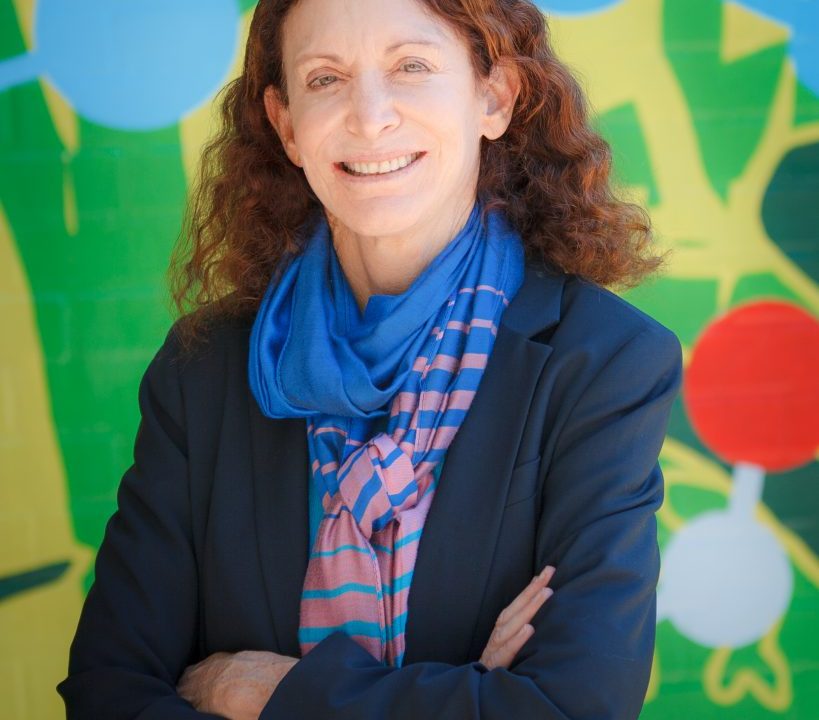
However, sick with Lupus, and distraught by how often her murals were destroyed by graffiti, Golden moved back east in 1983 to be closer to her family in New Jersey. In 1984 Golden was hired as a field representative for Philadelphia’s Anti-Graffiti Network, led by activist Timothy Spencer and supported by Mayor Wilson Goode. She reached out to graffiti writers and worked to redirect their energies toward “something positive”—in particular, tossing their spray paint cans and picking up paintbrushes. The strategy worked. The graffiti writers were hired to work on murals, and the murals sprouted up throughout the city, generally unmolested by graffiti. Once she started “working with these kids from tough neighborhoods,” Golden recalled, “I realized I had never felt so at home. I knew this is where I belonged.”
In 1996 the Mural Arts Program became its own entity, when the Anti-Graffiti Network was restructured and the art program was transferred to the city’s Department of Recreation. Golden was named executive director. She opened the program’s doors to every child, not just graffiti writers. In 1998 she won the Philadelphia Award, which was, in her words: “a turning point both personally and professionally.” “We had come a long way from our time working with all house paint, big brushes and rickety scaffolding,” she noted.
The murals program had evolved. The community was systematically consulted so that the murals would reflect their wishes. After the permission of the wall owner was secured, a community meeting is held where those present decide upon the subject matter and general design of the mural. Consensus, usually achieved, is required before the project can move forward. Subjects range from autumnal beauty to labor history, and often depict inspirational figures, from everyday folks (heroic nurses or immigrants) to well-known success stories, such as Jackie Robinson or Frank Rizzo. Originally, Golden had been so focused on providing “opportunities for the kids,” that many of the murals had been amateurish. That changed – now an experienced artist is selected by the arts program to create the mural according to the community’s dictates. Inner city youths, community residents, church congregations, parolees and others assist in the painting and the removal of trash from the site.
By 2010 the Mural Arts Program annually served 1,900 young people. The program provides services (including art classes) to recreation centers, schools, libraries, homeless shelters and prisons. The program has produced about 3,000 murals, turning Philadelphia into “the city of murals.” The program’s budget has grown to $6.9 million, with less than a million from the city and the remainder from private sources. The fundamental objective of the program stayed the same throughout the years: to use mural making and art education as a means of saving individuals, preventing crime, spreading hope, and turning around devastated communities. As Golden often says: “Art saves lives.”