
1996
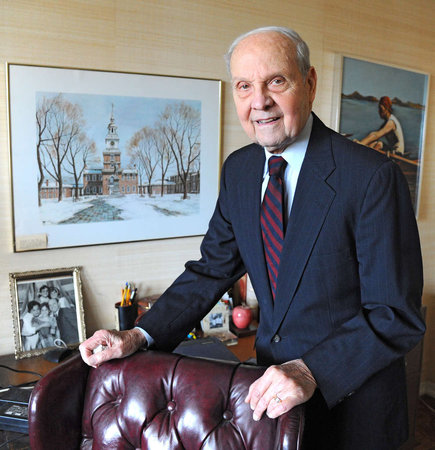
He was awarded a full scholarship to the University of Pennsylvania School of Law, graduating in 1947. During World War II Adams served as a Navy logistics officer in the North Pacific. Adams began his legal career with one of Philadelphia's largest law firms, Schnader, Harrison, Segal & Lewis. From 1963 until 1966 Adams remained with the firm while serving as secretary of public welfare under Governor William Scranton, where he helped introduce the educational program that became the model for Head Start. Adams was named senior partner before leaving the firm in 1969 when President Richard M. Nixon appointed him a judge of the United States Court of Appeals for the Third Circuit. He served on the appeal court’s bench until 1986, when he returned to Schnader, Harrison, Segal & Lewis as a partner.
A moderate Republican, Adams was seriously considered for an appointment to the United States Supreme Court by Presidents Nixon, Ford and Reagan. Adams became especially well-known and well-respected for his work as an arbitrator and mediator. By 1996 he had arbitrated 44 significant cases, which revolved around such issues as corporate responsibility for environmental cleanups, disputes between insurance companies, and liability for defective products.
Adams received the Philadelphia Award on June 3, 1997, “in recognition of his lifelong commitment to public service,” at a ceremony held at the American Philosophical Society, where he served as president. His triumphant handling of the bankruptcy of the Foundation for New Era Philanthropy, however, was the specific reason that the award was granted to him.
The Foundation for New Era Philanthropy was based in Radnor, Pennsylvania and offered to double the money of nonprofit organizations that invested their funds with them. The foundation’s representatives had claimed that they had access to a group of anonymous benefactors who had made the double the money pledge. However, the benefactors were fictitious and the promised returns were drawn from the flow of new deposits from unsuspecting nonprofit groups. Hundreds of organizations were hoodwinked.
When representatives of the nonprofit organizations met to seek resolution of the debacle, attorney Michael Bloom recalled, “the hope was that a single name would percolate to the top and it did.” The person who percolated to become the trustee was Adams, who negotiated a complex settlement among the creditors which involved redistributing some of the gains received to those groups that had lost their investments. Adams explained the rationale of the settlement: “The key here was to get people to see beyond the money and look at the bigger implication. This was going to really hurt the city, because charities would not be able to raise money.”
The bankruptcy of the Foundation for New Era Philanthropy was the largest nonprofit bankruptcy and fraud case in American history. Richard Smoot, chairman of the Philadelphia Award trustees, said: “Judge Adams is a person of masterful leadership, unquestioned integrity and extraordinary wisdom – attributes that have combined to make him a modern-day Solomon for Philadelphia and beyond.” As a result of his leadership as trustee, every nonprofit organization that invested money in the fraudulent scheme survived.
1995
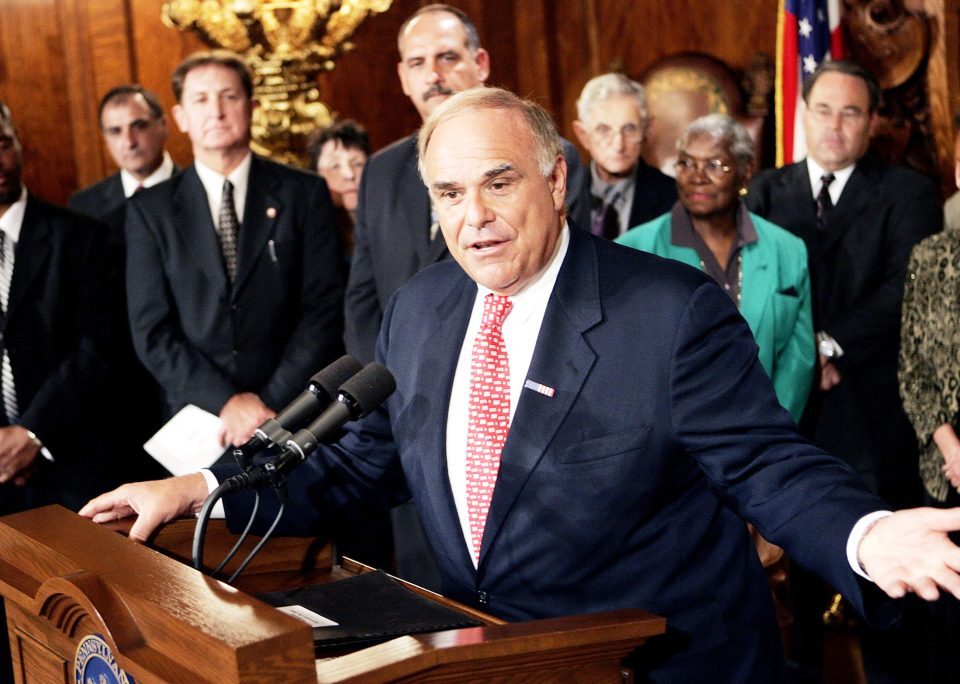
Rendell graduated from the University of Pennsylvania (1965) and Villanova Law School (1968). He began working in the district attorney’s office, where he gained a reputation for his passion (and his temper). He won election as the youngest district attorney in Philadelphia history in 1977. After serving two popular terms, he left to run for governor in 1986, losing to Bob Casey, Sr. in the Democratic primary. The following year, he ran for mayor of Philadelphia, but lost in the primary to incumbent Mayor W. Wilson Goode.
After a few years working as a lawyer, Rendell was ready to get back into politics. He ran for mayor again in 1991, this time with a different outcome. Rendell was set to face former Mayor Frank Rizzo in the general election, but Rizzo passed away during the summer, and Rendell easily defeated his replacement.
Rendell entered the mayoral office facing huge budget deficits and other economic problems. As mayor, he eliminated a $250 million deficit, reduced business and wage taxes, implemented a balanced budget, and oversaw five straight years of budget surpluses. Under his watch, much of the revitalization of Center City took place, and the city grew as a tourist destination. Rendell waged initiatives to improve the city’s neighborhoods and was tough in negotiating new deals with the city’s union workers. His gregarious style and unabashed Philadelphia boosterism were also essential to his popularity. The spirit and pride of the city appeared reignited. Rendell gained national prominence during his administration.
Rendell shared the 1995 Philadelphia Award with City Council President (and future Mayor) John F. Street. Upon receiving the award, the two praised one another for “avoiding the political bickering that can paralyze a government.” Rendell had previously opposed Street’s candidacy for reelection to City Council, so the ability to overcome their differences and find common ground to put the city first earned them this prize. Ron Naples, chair of the award trustees, commented, “There is so much cynicism today about politicians and the process of governing that it's refreshing to find two leaders working together as do Mayor Rendell and Council President Street.”
Nearing the end of his second term in 1999, Rendell resigned to become chairman of the Democratic National Committee, a position he held throughout the 2000 presidential election. In 2002, Rendell was elected governor of Pennsylvania. A major and successful initiative of his first term was a plan to reduce property taxes by legalizing slot machines in the state and taxing their revenue. Legalized gambling activities were expanded to include poker and table games. Rendell gained reelection in 2006 and continued to fight for his policies, which included increasing public school funding, investing in alternative energy projects, and (unsuccessfully) pushing for stricter gun laws.
Throughout his political career, Rendell gained a reputation for being a passionate leader whose alternately combative and enthusiastic style engendered strong feelings from both his allies and his opponents. Known as a straight shooter, Rendell achieved great popularity in Philadelphia, a city where his bluntness and toughness served him well.
The ex-governor was soon hired as a political analyst for NBC News and MSNBC.
1995
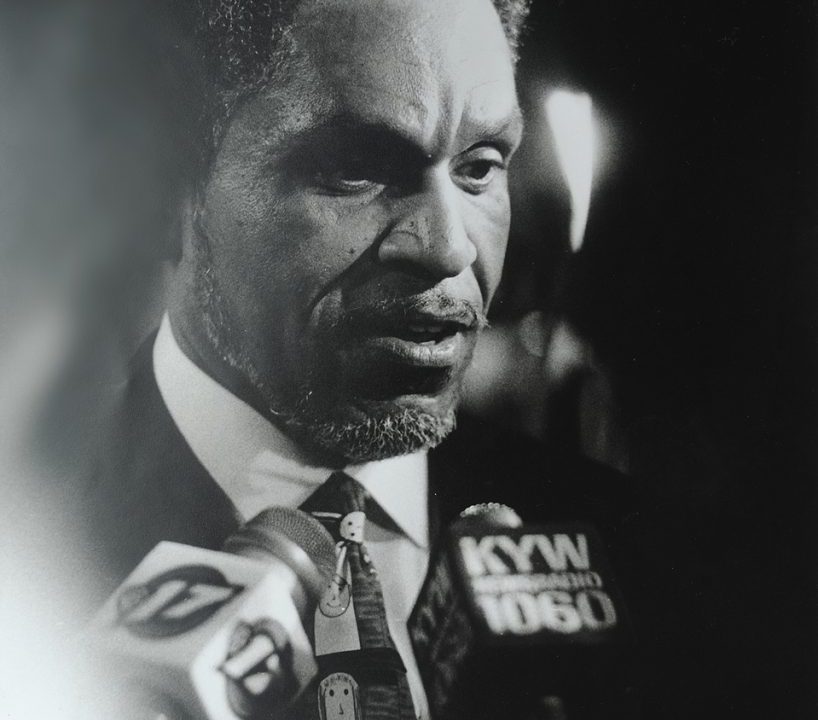
Ron Naples, chairman of the Philadelphia Award, said, “It’s refreshing to find two leaders working together as do Mayor Rendell and Council President Street.” That Street would be awarded for effective working relations with the mayor would have been unthinkable when he started his public career. First as a scruffy-bearded defense lawyer wearing jogging suits and sneakers and then as a city councilman, Street proudly considered himself one of “the rabble-rousers.” Portrayed in his early Council days as irresponsible and a “quick-tempered outsider,” Street’s behavior supported those accusations. He once protested a ruling by grabbing a stenotype machine and running around the Council floor with it, was forced off the Gas Commission after falling $5,600 behind in his ass, and exchanged punches with and threw ice water at fellow councilmen.
But Street learned on the job, changing much of his behavior as he gained experience and a better understanding of politics. He arrived early each day, worked tirelessly, and studied all aspects of city government. Street developed a reputation as being “intelligent, pragmatic and effective.” Councilman W. Thacher Longstreth described Street’s metamorphosis when he said, “He went from being just about the most irresponsible to the most responsible and important member of Council.” Charles Pizzi, president of the Greater Philadelphia Chamber of Commerce, opined that Street “has demonstrated the best evolution in recent Philadelphia political history. He has honed his political skills in an extraordinary way, and there’s no other legislator who is as well prepared on any issue as he is.”
During his two terms as mayor, Street advanced an ambitious agenda. While Center City under Rendell had undergone a remarkable renaissance (which deepened under Street’s administration), Street launched bold initiatives to improve life in Philadelphia’s less affluent neighborhoods. Most of the city’s high-rise public housing towers, which had become miserable places to live, were torn down and replaced (in part) with attractive, single unit public housing. The city removed 250,000 abandoned cars. Street waged an anti-blight initiative to tear down or renovate abandoned houses. Street also secured funding for two new sports stadiums and advanced the development of the Navy Yard.
After leaving office, Street remains an influential and controversial figure in city politics.
1994
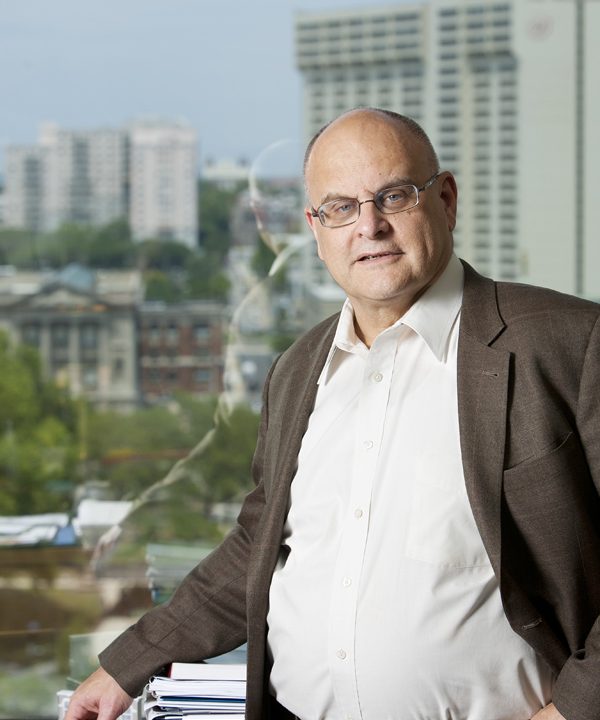
Started in 1985 and originally called the Delaware Valley Community Reinvestment Fund, the fund began with a $10,000 foundation grant. This money was used by a group of socially concerned investors, professionals, and community activists to hire Nowak to create and run an investment fund. This fund would provide small low-interest loans to community groups and small businesses in economically distressed communities in the Delaware Valley. A community organizer, Nowak had been working in the Logan neighborhood of North Philadelphia as a block organizer--one who organizes residents to come together to deal with crime, housing, and other issues on their block.
The fund had no money to start with. Nowak spent about a year to raise the first quarter of a million dollars. It reminded Novak of his work as a block organizer--he spoke to one person, than another, just like he had gone door to door. Gradually confidence was gained and the fund grew steadily. By the time that Nowak won the Philadelphia Award, the fund had about 650 individual, church, corporate and foundation investors, who had purchased promissory notes with a low to moderate rate of interest. Acting as an intermediary between borrowers and lenders, the Reinvestment Fund then allocated money to projects that would improve the quality of life in the Philadelphia region’s poorest communities. The fund requires performance and accountability from the borrowers. It’s a form of philanthropy in which socially conscious investors receive their money back and a little more. Nowak stated: “We spend a lot of time talking to church groups about balance sheets and to corporate boards about values.”
Typical projects that have benefited from the loans include housing rehabilitation, day care centers, and small businesses. In 1995 Nowak observed that the fund had never lost money on a borrower. There have been many success stories. A community group in North Camden that had rehabilitated a few houses received a $50,000 grant. The group had no collateral, so it was one of those investments “made on faith,” as Nowak described it. The group went on to rehabilitate over one hundred houses and is now “a thriving construction company.” The Gesu School, a Catholic school located in North Philadelphia, wanted to expand to accommodate 200 students from nearby Catholic schools that had been shuttered during the early 1990s. The church had been told that the regional church was not in a position to help. Stepping into the breach, the Reinvestment Fund aided the Gesu School with a $150,000 loan.
By 1996 the fund had loaned 40 million dollars and held assets of about 20 million. “Working in an inner-city neighborhood,” Nowak recalled in a 2010 interview, “I saw that the issue of capital was critical, and that was an issue that often was avoided, or often wasn’t thought about. So I saw that while civic organization and civic power were fundamental to social change, capital was also. This seemed like an opportunity to combine organizing talent with an interest in how to put capital in the hands of organized people.” After winning the award, Nowak commented, “There is a real longing out in the community to do the right thing. There is a broad center of opinion--one that is black and white, rich and poor--that wants to rebuild these neighborhoods, but with discipline.”
1993
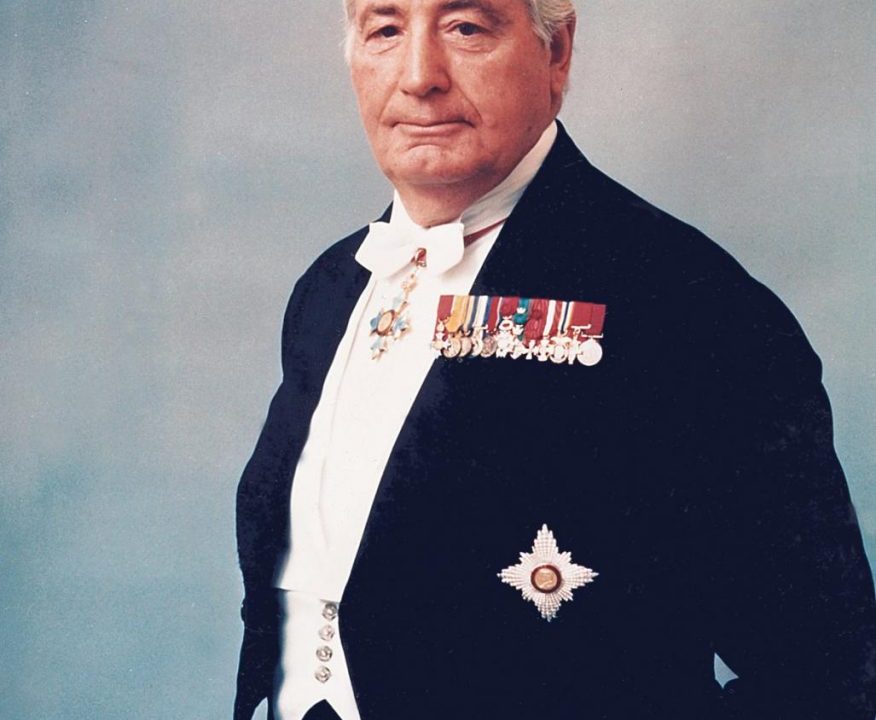
When named ambassador to Great Britain in 1969, Annenberg sold the Inquirer and Daily News. His time in London got off to a rocky start; British society mocked his lack of diplomatic qualifications and speaking style. But eventually he (and his wife Leonore with her social skills) won over not only the British public but also the Queen and royal family, who would be life-long frequent guests at the Annenbergs’ California estate, Sunnylands—named after Moses Annenberg’s summer place in the Poconos.
Back in America, he dedicated the rest of his life to philanthropy, particularly for education. He set up a $500 million fund to help public school systems nationwide (including $50 million to the Philadelphia school system). He established communication schools (named for his father) at the Universities of Pennsylvania and Southern California (USC). He financed, in 1986, the Annenberg Institute (successor to Philadelphia’s Dropsie College and later to become Penn’s Herbert D. Katz Center for Advanced Judaic Studies). He sold Triangle Publishing in 1988, putting most of the money into the M.L. Annenberg Foundation he founded the following year in Radnor. He was a hefty supporter of New York’s Metropolitan Museum of Art (with $57 million in cash and eventually $1 billion worth of art), the Corporation for Public Broadcasting ($150 million), and the United Negro College Fund ($50 million). Besides Penn and USC, he gave $25 million to Harvard and $100 million to the Peddie School of Hightstown, NJ, his prep school alma mater.
In a 1995 profile by Mark Bowden in the Philadelphia Inquirer, Annenberg explained his focus on education: “I see it on TV and read it in the newspapers. Eleven year-old children shooting other eleven-year-old children, bringing knives and guns to school. Maniacal children…Society is breaking down completely in neighborhoods where this happens. It frightens me. I’m frightened for my country. Education is the only answer. It’s the glue that holds civilization together. I decided to concentrate on grades K through 12 because that’s where this needs to be attacked. I wanted to give an amount big enough to startle private and public leaders. I want to elevate it as a national priority. I feel it is my responsibility as a citizen.” Annenberg gave the money to programs for systemic educational reform, and he did so shrewdly, requiring matching funds from private and public sources.
Closer to home Annenberg supported the Academy of Music, Pennsylvania Hospital, and the Philadelphia Orchestra. He bought the Zoo a baby elephant. In 1986 President Reagan awarded him the Medal of Freedom. He received the 1993 Philadelphia Award at its spring ceremony in 1994. At his death he was the 39th wealthiest American, with a fortune over $4 billion.
1992
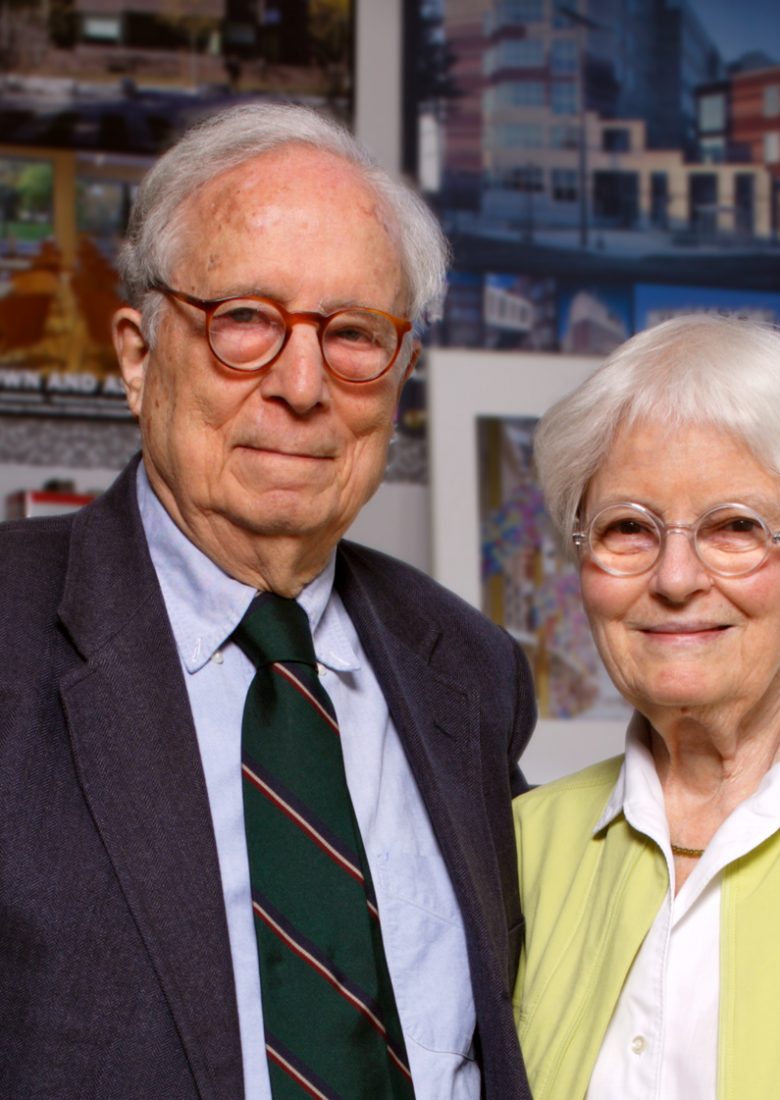
Improving the area around Penn would make that community a more desirable place for Penn faculty and students to live, enabling the continued growth of the university, while (hopefully) making it a better place for the community’s non-academic residents as well.
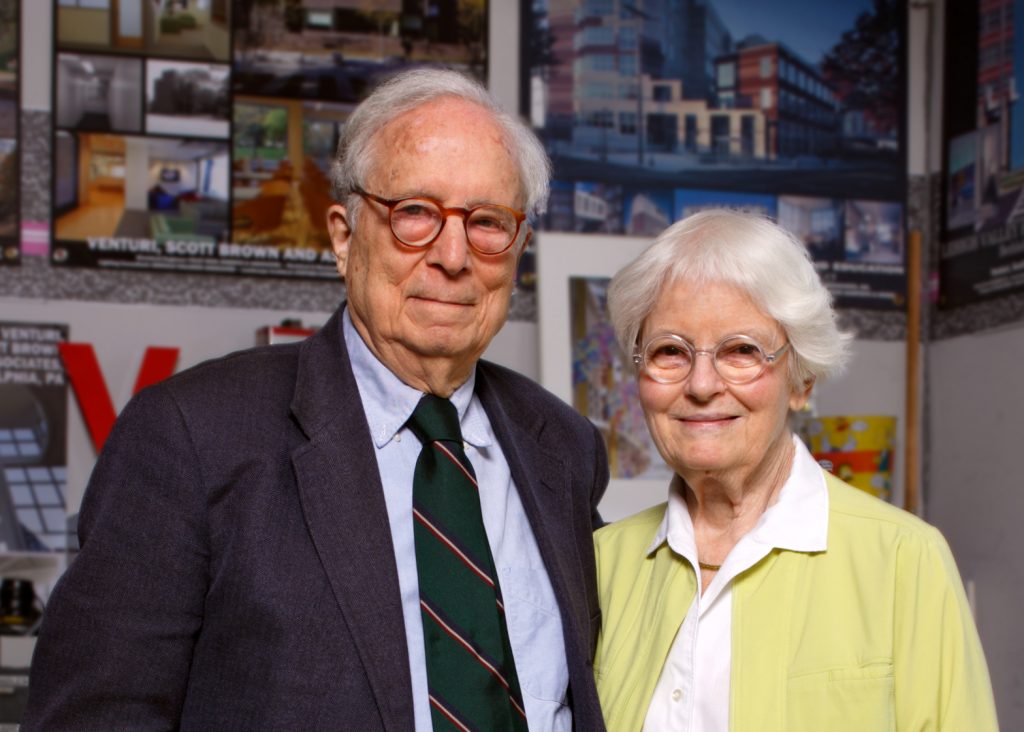
Born in Philadelphia, Robert Venturi was raised in nearby Upper Darby. He attended Episcopal Academy in Merion, Pennsylvania. He received a bachelor’s degree in 1947 and an M.F.A. in 1950 from Princeton University. He worked briefly for the Finnish architect Eero Saarinen and for Philadelphia’s own Louis Kahn. From 1954 to 1965, Venturi held a teaching position at the University of Pennsylvania, where he met fellow faculty member, architect and planner Denise Scott Brown. The two were married in 1967 and Scott Brown joined Venturi’s architectural firm, Venturi and Rauch, which was renamed Venturi, Rauch, and Scott Brown in 1980--and ultimately Venturi, Scott Brown, and Associates in 1989.
Denise Scott Brown, who is considered by some critics to be the world’s foremost female architect, was born Denise Lakofski in Northern Rhodesia (now Zambia). She studied at the University of Witwatersrand in South Africa and then continued her education at the Architectural Association School in London, from which she received a degree in architecture in 1955.
After traveling and studying in Europe for three years, Scott Brown came to Philadelphia in 1958 to study at the University of Pennsylvania’s planning department. She received her master’s degree in city planning in 1960 and became a faculty member at the university. In 1960, Scott Brown met Robert Venturi at a meeting to oppose the planned demolition of the Furness Library at Penn. She and Venturi eventually collaborated and taught courses together. The library was later restored by their firm.
Venturi’s Complexity and Contradiction in Architecture (1966) established his reputation as a theorist and designer with radical ideas. He summed up his view of modernism in his widely quoted adage “less is a bore.” As opposed to the functionalism and simplicity of rigid modernism, Venturi argued that complexity and contradiction in architecture is far more interesting, the richness of symbolism and embellishment. This work was very influential in the profession, eventually translated and published in 18 languages.
Architecture historian Vincent Scully said of the impact of Venturi’s critique of modernism: “Venturi saved modern architecture from itself, and has been hated by almost all modern architects. His buildings were prepared to get along with other buildings in the city, to take up their roles in a gentle comedy of citizenship rather than in a melodrama of pseudo-heroic aggression.”
In the mid-1960s Scott Brown and Venturi, with Steven Izenour, led a group of Yale architecture students to study the buildings of the Las Vegas Strip. This resulted in A Significance for A&P Parking Lots, or Learning from Las Vegas (1972), by Venturi, Scott Brown, and Izenour, which was revised and published as Learning from Las Vegas: the Forgotten Symbolism of Architectural Form (1977). Like other writings by Venturi and Scott Brown, Learning from Las Vegas was critical of modernism and promoted acceptance of American vernacular architecture. This view was pioneered by Scott Brown, who had often intrigued her husband with her observations about everyday buildings, prodding him to view such buildings as a source of architectural ideas.
Scott Brown is widely known as an urban planner, designer, and theorist. In 1969 she became head of planning and a partner at Venturi and Rauch. Scott Brown has led many major civic planning studies including for the Jim Thorpe Historic District, the Denver Civic Center, entertainment and transit in Minneapolis, Minnesota; and for Main Street and South Street in Philadelphia. She also conducted numerous college planning studies, including for the University of Michigan, the University of Pennsylvania, and Tsinghua University in Beijing, China. Her writings include Having Words (2009), a collection of essays which includes her advice to New Orleans on its rebuilding. Venturi and Scott Brown have often been visiting lecturers at universities.
Venturi’s first important design was a house for his mother, Vanna Venturi, in the Chestnut Hill neighborhood of Philadelphia. His works draw inspiration from past architectural styles, often presenting familiar forms in new and inventive ways. His many landmark buildings include the Guild House apartments on Spring Garden Street, the Sainsbury Wing of London’s National Gallery of Art, Philadelphia’s Franklin Court, the Nikko Kirifuri spa and resort in Japan, and the tree house and primate pavilion at the Philadelphia Zoo. Scott Brown has served as principle-in-charge (overseer) of the firm’s larger projects, such as the aforementioned Sainsbury Wing of London’s National Gallery and Nikko Kirifuri resort in Japan. From 1997-1999, their firm oversaw the renovations of the Historical Society of Pennsylvania’s historic, 1910 building, including its main reading room.
1991
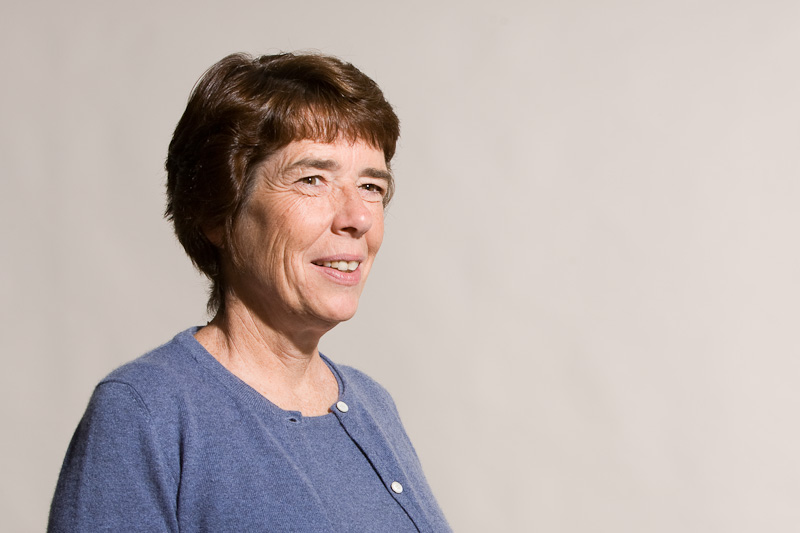
She joined the Sisters of Mercy at age 19, and eventually began working at Mercy Hospice, a women’s shelter operated by the Sisters. For Scullion, this “was the most profound experience I ever had of God. There’s no pretense. It’s true. It’s real.”
Scullion requested that her mandatory yearly retreat be spent on the streets of Philadelphia, instead of in the Sisters’ motherhouse. She spent the week as a homeless woman, sleeping wherever possible, utilizing public restrooms, and scrounging for food. Of her experience, Scullion said, “It was the hardest thing I ever did. [I returned] sick as a dog, really depleted.” But she learned first-hand what it meant to be homeless, and developed a sense of urgency to address the problem.
Committed to ending homelessness, Scullion co-founded Woman of Hope in 1985, the OutreachCoordinationCenter in 1988, and Project HOME (Housing, Opportunity for Employment, Medical Care, Education) in 1989. Serving mentally ill homeless women, Woman of Hope provides permanent residences and support services. The OutreachCoordinationCenter integrates the services of public and private agencies to more effectively administer help to the chronically homeless. Project HOME provides affordable housing, job training and health care to homeless and low-income individuals. More than 95 percent of those helped by Project HOME have avoided a return to homelessness, “a success rate [making] the program a model for dozens of other U.S. cities.”
Although her work on the streets is legendary, Scullion’s work in the political arena is equally significant. Her efforts led to the right of homeless persons to vote, and also resulted in a “landmark federal court decision [affecting] the fair housing rights of persons with disabilities.” She believes that homeless policy should shift from managing homelessness via shelters and emergency services, to supporting permanent, affordable housing and job training programs. Scullion “can’t accept that our government can pour billions of dollars into failing corporations… and not be able to fund permanent supportive housing which not only saves lives [but eventually] money.”
In her service to the homeless, Scullion has been arrested for trespassing while providing food for those sheltering at 30th Street Station. She has “crawled down manholes and into the darkest alleys” to invite homeless individuals to shelters. Ed Rendell called her “Philadelphia’s Joan of Arc,” “because so many people want to burn her at the stake” for her aggressive advocacy. Perhaps the reason for all her efforts is found in Scullion’s belief: “Whatever affects one directly affects all of us indirectly. If there is homelessness in our society … we are all diminished.”
1990
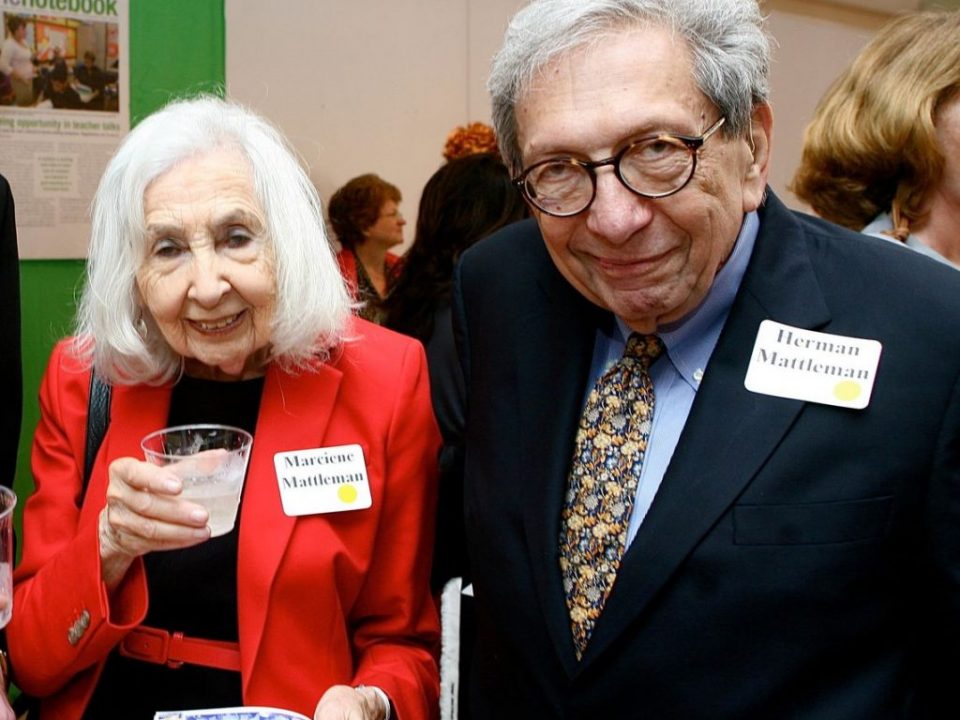
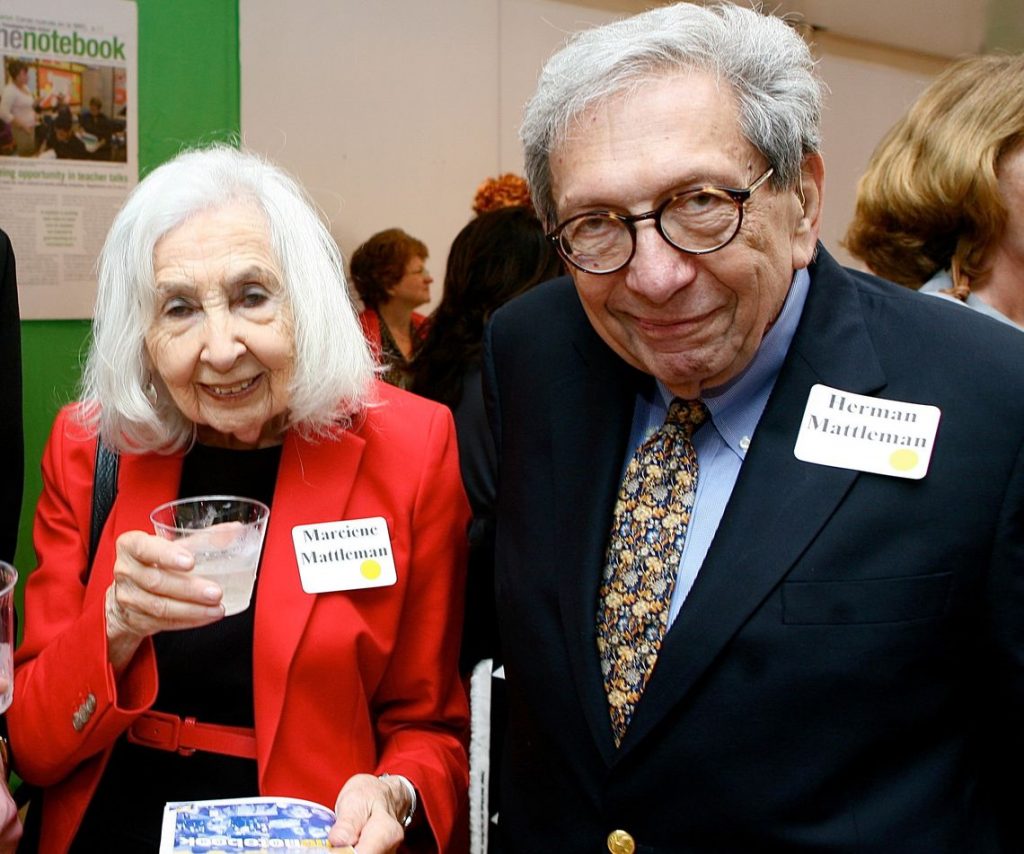
Mattleman was born and raised in Philadelphia. His parents were Russian immigrants who instilled in their son the values of hard work and the importance of education. His father owned a kosher butcher shop. The family settled in a small Jewish neighborhood in the Strawberry Mansion section of Philadelphia. Mattleman is an admirable example of the possibilities within the Philadelphia public school system—he graduated from Fitzsimmons Middle School and Simon Gratz High School (as a B student), and went on to graduate from the University of Pennsylvania (1947) and its law school (1949). Mattleman began his legal career in the early 1950s, and today is a partner at Mattleman, Weinroth & Miller, P.C.
During his first year on the board of education, Mattleman raised various issues over costs and supplies. His colleague Sam Katz recalled Mattleman questioning the high price paid for toilet paper at his first board meeting, establishing himself as “tough, determined and humorous all at once.” During his nine years on the school board (seven as its president), Mattleman earned the respect of educators, politicians, community leaders, and parents because of his dedication and accessibility. He never once missed a board meeting, and brought a new style of leadership to the board, one based on consensus building and teamwork. He supported Clayton’s policies of implementing a standardized curriculum, tougher academic standards, and fiscal reform.
Mattleman was exposed to the truly difficult lives many Philadelphia students faced every day. Poverty, dysfunctional families, and the ravages of drugs were problems faced by a great many students. Mattleman first recognized the extent of the problem when visiting an elementary school. He observed that “the principal had a washing machine and kids would come in with their dirty clothes and she would wash them. And she and her staff would mend their clothes, too.” Mattleman was especially concerned by studies showing that the number of public school students in the city in poor to fair health was more than double the national average. Mattleman launched an initiative to create a district-wide, school health organization. The program proved to be too ambitious, but health clinics at some schools, including Benjamin Franklin and Bartram high schools, had limited success.
His final year as president was marked by tension with City Council over the board of education’s budget proposal. Mattleman’s advocacy for the students of Philadelphia was evident in his strident defense of the budget. He recognized that Philadelphia’s schools had to supply not just the basic educational needs of the student body, but also provide a sense of stability and community. He resigned in November 1990.
The day after his resignation, his wife Marciene signed him up for her Philadelphia Future’s program, committing him to mentoring a public school student once a week. Mattleman also remained active as chair of the city’s Educational Nominating Panel (1992-1999) and through his service on the boards of numerous organizations.
1989
After spending the next four years as a research associate for the Yellow Fever Research Service in Rio de Janeiro, Brazil, Koprowski settled with his family in Pearl River, New York where he worked as a researcher at Lederle Laboratories. In 1948 Koprowski tested the polio vaccine he was developing, by swallowing a liquid (his vaccine) that included mashed rat brains infected with the live polio virus. By 1950 Koprowski had developed the first oral polio vaccine. The vaccine was administered in mass trials, including to nine million children in Poland and 250,000 children in what today is called Zaire. These trials proved effective, and thousands were saved from the crippling disease. Although his vaccine was never licensed for use in the United States, Koprowski’s pioneering work paved the way for Albert Sabin’s polio vaccine.
In 1957 Koprowski was recruited to be the director of the Wistar Institute at the University of Pennsylvania. He described the facility upon his arrival as “more a museum of skeletons than a site of research.” Koprowski was also a professor of research medicine and microbiology. Under his leadership, Wistar scientists developed the Rubella (German measles) vaccine, virtually eliminating the disease from much of the world. Along with his colleagues, Koprowski developed a more effective rabies vaccine than the one developed by Louis Pasteur, as well as an oral bait version for animals. During the late 1970s, Koprowski led the way in the development of the first functional monoclonal antibodies, which are used in cancer immunotherapy and to detect cancer antigens.
For his research achievements at the Wister Institute, Koprowski received the Philadelphia Award of 1989. When proposing Koprowski for the award, Dr. Luther W. Brady wrote that Koprowski “has probably done more to benefit mankind in general than any other current medical investigator [in Philadelphia].”
After thirty-four years as director of Wistar, Koprowski was dismissed by the institute’s board of trustees in 1991. He and the board sued each other in federal court, with Koprowski charging age and personal discrimination, and the board pointing to the institute’s deficit and the biomedical firm, Centocor, which Koprowski had cofounded. The issue apparently was whether scientists, or the university, should profit from discoveries. None could dispute, however, that Koprowski had transformed the Wistar Institute into a world-renowned center for biomedical research, with a staff that had expanded from 4 to over 150 scientists.
In 1992 Koprowski was hired by Thomas Jefferson University as the Director of the Center of Neurovirology and Biotechnology Foundation Laboratories, where he oversaw the development of new products for the treatment and prevention of diseases, including cancer, multiple sclerosis, and hepatitis B. At the age of 96 Koprowski continues to work as a researcher at Jefferson. His achievements represent the “particular role of Philadelphia scientists in the development of biomedical sciences” and his lifelong commitment to groundbreaking research in virology and cancer research.