
1988
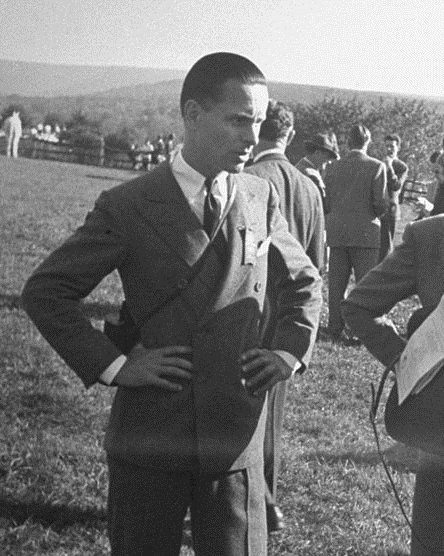
Strawbridge was the grandson of the co-founder of the Strawbridge & Clothier department store situated at 8th and Market Streets. After high school, Strawbridge worked at lower level positions in the store for nearly two decades, before serving twelve years each as company president, chief executive officer, and chairman of the executive committee. Under his direction the family-run company expanded from three to thirteen stores, and annual revenue increased to nearly $1 billion.
During the 1980s when locally owned department stores were being snapped up by Wall Street investors at a ferocious pace, Strawbridge thwarted a hostile takeover by investor Ronald Baron. Among his actions was to place a full-page newspaper advertisement declaring: “The Family is Not For Sale. More than 12,000 employees, over 3,000 shareholders, third-, fourth- and fifth-generation Strawbridge & Clothier descendants - we are a family.”
The Philadelphia Award was presented to Stockton Strawbridge in 1989 for his unremitting commitment, extending four decades, to renovate East Market Street from a dilapidated, decaying strip into a revitalized corridor of commerce. Strawbridge initiated and directed the Market Street East Improvement Association, whose mission was the beautification of the stretch of Market from City Hall to Sixth Street. Mayors of Philadelphia and civic leaders took his telephone calls and made trips to see him in the flagship store at 801 Market Street. His office displayed pictorial representations of “a transformed East Market Street.” Sketches depicted “a grand boulevard” embellished with attractive lights, punctuated with new trees and trash baskets, dotted with bus shelters, decorated with street signs and benches, and maintained “by a cadre of uniformed ‘marshals’ to keep it all pristine.” Strawbridge claimed that an “unimproved East Market Street” was “a Champs-Elysees in the rough.”
Strawbridge raised almost $14 million to achieve this vision. His persistence overcame the resistance of leaders in Philadelphia who thought the improvement project was folly. He frequently visited business owners along East Market Street to raise a $2 million maintenance fund to keep the street “clean and beautiful.” Strawbridge was also instrumental in bringing the Gallery 1 and Gallery 2 shopping malls to the street. The Market Street East Improvement Association became the model for the Center City District, as Mayor Edward G. Rendell and business leaders sought to replicate Strawbridge’s success to Center City in its entirety.
After learning of Strawbridge’s death, Rendell declared that Strawbridge was “one of the greatest Philadelphians in the history of the city…He was someone that understood the importance of giving back to the city.” Strawbridge’s attorney, Peter Hearn, recalled his surprise at seeing the elderly Strawbridge pick up a gum wrapper off Market Street. Strawbridge remarked to Hearn: “As the fellow who is leading [the initiative to improve East Market Street], I’m not above bending down to pick up a gum wrapper. We’re all part of this.”
1987
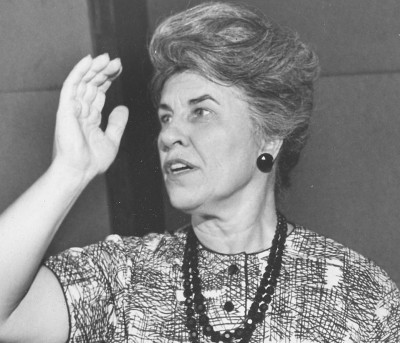
Brown had a connection with another Philadelphia Award winner, 1943’s Marjorie Penney. The Singing City Choir started during the mid-1940s as a 15-member community chorus directed by Brown at Fellowship House (the organization founded by Penney). Following Fellowship House’s mission, the choir was always multi-ethnic and multi-racial. It was meant to bring people together, not apart.
Eventually, it had 100 members from all parts of the city, at a time when the city was racially divided, with de facto residential segregation. The choir performed in all neighborhoods, at churches, schools, playgrounds, community centers, nursing homes, and even prisons. Standards were tough—Brown insisted on auditions each year, regardless of how many years a member had been with the chorus. Rehearsals were frequent, and the choir won the respect of professional classical musicians not just for its social mission, but for its quality. The chorus performed regularly with the Philadelphia Orchestra, and sang around the world, most notably perhaps in Israel and Egypt in 1974. The choir also toured in the American South, but refused to stay at hotels or eat in restaurants which would have forced them to accept separate racial accommodations.
While the Singing City may have been amateur, Brown certainly was not. She received a bachelor’s degree from Rider University’s Westminster Choir College in 1934, and then joined its faculty. She went on to earn a Master’s degree in 1945, and then headed the choral department, at Temple University’s Esther Boyer School of Music, prior to founding Singing City. When the duties of Temple and the Singing City proved to be too great, Brown quit Temple to concentrate on Singing City, to the dismay of friends who questioned her abandoning a secure income for such an uncertain quest. As it turned out, Brown was indeed able to earn a living, supplementing her income from Singing City by training choral conductors and guest conducting.
Brown returned to Temple as a professor of music in 1975, after an absence of twenty years. In 1970 Brown became the second woman to conduct the Philadelphia Orchestra. Singing City remains a thriving organization today, with an 115-member choir and educational programs for children and youth. Brown retired from Singing City in 1987.
Brown believed in bringing people together, but mostly she believed in the power of music. One of her memorable lines was “Music is the great gluer—it holds us all together.” This brings back the thought of that second Elaine Brown. Here are two people with the same name; both with musical roots in Philadelphia (the second Brown composed original music for the Black Panthers), yet their lives went in radically different directions. While the Conductor Elaine Brown brought people together, Panther Brown’s angry rhetoric was driving communities further apart. Perhaps that “glue” part was a music lesson the second Elaine Brown missed.
1986
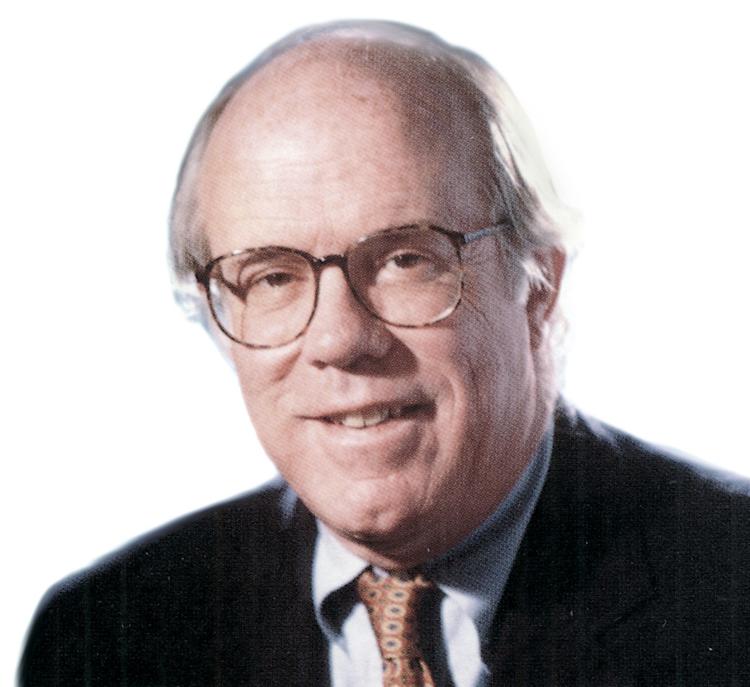
His father Willard Rouse and uncle James Rouse were influential real estate developers, owners of the Rouse Company. Rouse worked on occasion for the family business, but was determined to strike out on his own. His big break came when he was hired by a Los Angeles firm to develop several hundred acres of farmland in southern New Jersey near Philadelphia. He built an industrial park. The opportunity delivered Rouse to the Philadelphia area and earned him $80,000. With that money, he launched his own company in 1972. The firm, Rouse & Associates, mainly built industrial buildings in the Philadelphia area.
In the early 1980’s, Rouse promoted a development project, One Liberty Place, at the corner of 17th and Market Streets in Center City Philadelphia for which he became renowned. Prior to constructing One Liberty Place, there was a seemingly inviolable gentlemen’s agreement stipulating buildings within Philadelphia could not exceed the statue of William Penn that adorns the top of Philadelphia’s City Hall – in other words, 548 feet. One Liberty Place was designed by Chicago architect Helmut Jahn as a post-modern “grayish-blue glass-and-granite” skyscraper rising 947 feet.
His proposal encountered resistance from many of the city’s residents. A poll taken by Philadelphia Daily News of its readership showed that a bare majority – 53.3% - supported construction of One Liberty Place. When he proposed the project, Rouse did not purposely plan to abrogate the traditional building height restriction. Rather, he said, he wanted to avoid erecting “an ugly complex of buildings” to accommodate the city’s height limit. Among his opponents was Edmund Bacon, former planning director of Philadelphia, who severed his friendship with Rouse. City Council approved the project by a vote of fourteen to two.
Rouse won the Philadelphia Award in 1986 for having dared, and succeeded, at building the city’s first skyscraper, ending Philadelphia’s refusal to modernize its appearance and enhance its skyline. A frank-speaking, informal man, Rouse was a master organizer who thrived when working on complex, difficult projects that other developers avoided. In 1987 Rouse became chairman of the group, We the People 200, Inc., charged with organizing the city’s celebration of the bicentennial of the U.S. Constitution. The group had been faltering, but Rouse rescued the city’s celebration, which was hugely successful. In 1994 Rouse reorganized his business as Liberty Property Trust, which grew to be worth $4.6 billion with business in 10 states and the United Kingdom. Yet Rouse will be remembered mostly for his work in Philadelphia. He spearheaded the development of the massive Convention Center. He considered his greatest achievement to be the building of the Kimmel Center for the Performing Arts, arguably Philadelphia’s most distinctive modern building.
“’Bill was our champion. More so than anyone else, he could overcome Philadelphia’s all-too-frequent lack of self-confidence,’ said Peter Hearn, former chancellor of the Philadelphia Bar Association. As a developer and a civic leader, Rouse revised the skyline and direction of Philadelphia – upwardly.
1985
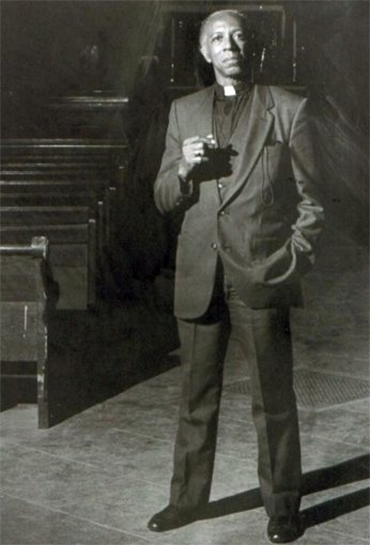
Washington was, in many minds, synonymous with the Church of the Advocate, a predominately Black, Episcopal congregation in North Philadelphia. But the influence of that church had implications beyond those borders. He was assigned to that struggling parish in 1962. By the time he retired in 1987 the church was not only thriving, but also had a $3.2 million community center named after Washington and his wife Christine.
In 1968 the Church of the Advocate hosted the National Black Power Conference; two years later it hosted the Black Panther Party convention. But it was 1974 that almost brought the national Episcopal Church to its knees. For Washington opened the Advocate’s doors to host the ordination of the first 11 women into the priesthood. The ordination was performed by three retired Episcopal bishops in defiance of church law. The Episcopal Church eventually changed its rules and recognized the ordinations in 1976. In 1980, at the request of U.S. Attorney General Ramsey Clark, Washington participated in an international peace conference in Iran.
On a more local scale, Washington served on the MOVE Commission that investigated the 1985 bombing of a house, and subsequent incineration of a neighborhood, in West Philadelphia. He was a supporter of the 1995 Million Man March in Washington, but a vocal opponent of the Promise Keepers movement. While both movements stressed male responsibility in the family, the Christian fundamentalist Promise Keepers insist that, according to scripture, the husband should be obeyed as head of the family. In 1996 he broke ranks with the Black Clergy of Philadelphia (and was on the opposite side of the Archdiocese of Philadelphia) when he supported domestic partner benefits for gay and lesbian city employees.
Even closer to home was the work that Paul and Christine Washington did for their neighborhood through the Advocate Community Development Corporation, rehabbing hundreds of housing units and reducing urban blight in North Philadelphia. Washington was a firm believer in the social Christian gospel. His successor at the Church of the Advocate put it this way: “Paul, first and foremost, no matter what arena he was operating in, was a priest. He did not function in a way that his identity as a servant of God and a servant of the church was ever confused. Everything he did flowed out of that.”
1984
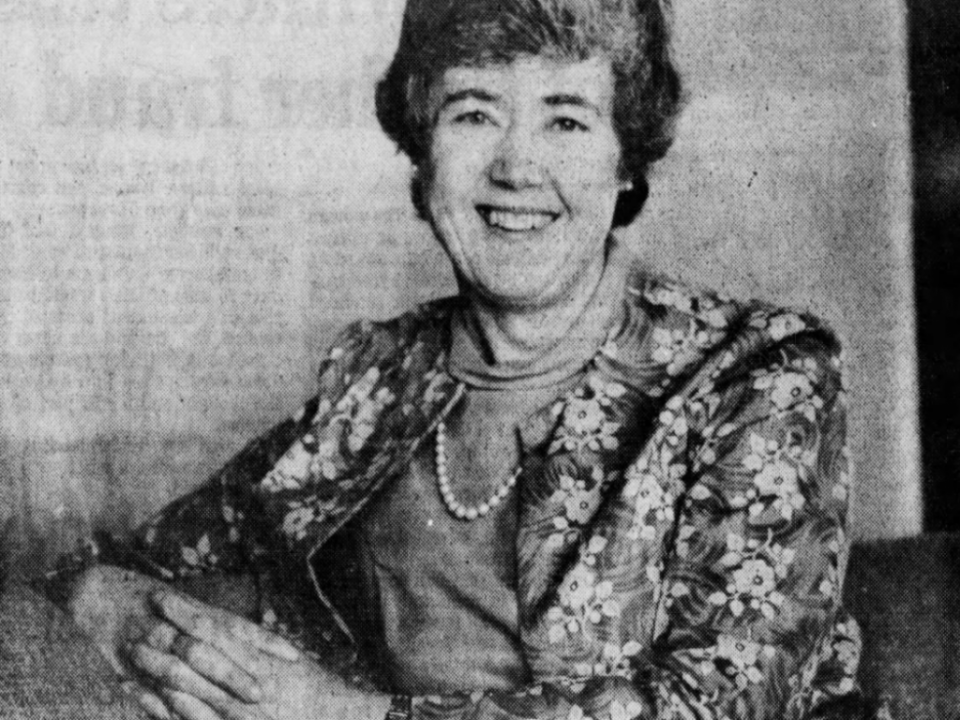
Allcock was leaning toward accepting a position in Nigeria until some friends of hers suggested another plan—purchase a house in a poor section of Philadelphia, and service the needs of the neighborhood. Inspired by the civil rights movement, Allcock took up the challenge, purchasing a house in Germantown. She and her friend, Joan Hemenway, founded what would later be called Covenant House. Hemenway became her lifelong companion.
Allcock noted, “We called it ‘the ministry of being there.’” In fact, no one knew she was a doctor for the first two years. Allcock and her colleagues tutored neighborhood children in reading, established a library for them, and later started a nursery school.
In 1965, Allcock secured her medical license as well as enough money to purchase some medical equipment. She placed her medical sign on the premises, and began accepting patients. She faced resistance at first, as people were not accustomed to a female physician. As Allcock recalled, “nobody believed it. Doctors weren’t women and doctors didn’t roller skate down the street. But the children knew me and trusted me, and they’d bring in their parents, and gradually we built up a medical practice.”
Covenant House thrived, and by 1985 was located in two houses on East Bringhurst Street, with nearby modular clinical units. The clinic had 32 full time staff members, including four physicians. Patients were charged on a sliding scale (based on their ability to pay), and the clinic ran on a break-even basis. In a 1984 article on hunger in Germantown, Allcock testified that a large number of the one thousand babies seen by the clinic each year showed signs of malnutrition.
By 1985 Allcock’s principal activities had changed, from her early days as an active physician to being Covenant House’s executive and medical director. As she noted, “I traded in my stethoscope for a calculator.” Allcock raised funds to support the operating expenses of Covenant House.
Allcock served as the director of Covenant House Health Services for 25 years. She later earned an M.A. in Landscape Design, and relocated to Connecticut. Allcock became an activist in the Guilford Conservation Commission from 2004 to 2010, including serving as its chairperson for five years. Allcock led many conservation initiatives in the town of Guilford, CT, including establishing a research orchard for the purpose of developing “a blight resistant Chestnut Tree.” She also served as a director of the American Chestnut Foundation’s Connecticut chapter. In 2010, Allcock planned on returning to Pennsylvania.
In presenting her the 1984 medal, the Philadelphia Award committee praised Allcock as one who “has set a model for health care practitioners and institutions throughout Philadelphia and beyond.”
1983
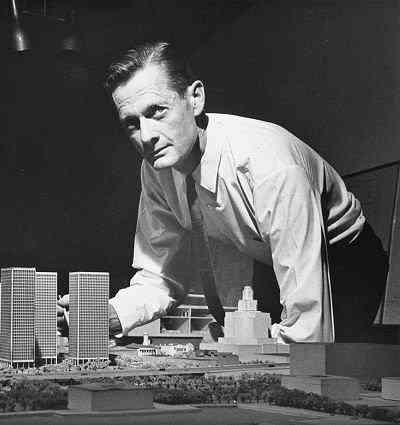
Bacon graduated from Cornell University’s School of Architecture in 1933. With the economy in the grips of the Great Depression, Bacon used a $1,000 inheritance to travel around the world. While in Egypt, Bacon learned that there was a building boom in Shanghai, China. He obtained employment designing public and private projects in Shanghai. After his stint in China, Bacon studied city planning at the Cranbrook Academy of Art in Bloomfield Hills, Michigan. He was a city planner in Flint, Michigan, and then director of the Housing Association of the Delaware Valley, before serving in the Navy during World War II.
In 1946 he began working for the Philadelphia City Planning Commission, a new agency which he had helped create. Bacon was appointed executive director in 1949. Advising four mayors who won and lost elections, Bacon remained a fixture with the planning commission until his retirement in 1970. He remained active as a planning consultant. The Philadelphia Award was presented to him in April 5, 1984 for being “a pioneer in urban revitalization, a person with a creative mind and spirit and one who has earned the gratitude of the people of Philadelphia and its environs.”
The city planning commission did not wield political power, so Bacon used persuasion and savvy to bring his ideas to fruition. His planning involved the center, west and northeast sections of the city, but he is best known for a residential neighborhood, an office development, and a retail commerce site – namely, Society Hill, Penn Center, and The Gallery and Market East, respectively. Under Bacon’s direction a low-income neighborhood with deteriorating colonial and Victorian era housing was transformed into what became known as Society Hill; a massive stone viaduct, a.k.a. the Chinese Wall, was torn down, and replaced with the office buildings of Penn Center; and businesses (via Market Street East and The Gallery) were introduced to the rundown area east of Market Street. He was also instrumental in the creation of Independence Mall.
A nationally influential figure, his vision for the city is captured in his essay, “The City Image,” published in Man and the Modern City (1963). Bacon argued that the city image must be sharp and clear but, above all, consider the human beings populating the area. Creating a humane city is achievable, Bacon believed, if city planning avoids abstraction and focuses on the environment that real people inhabit. He envisioned a city (with the focus on Center City) that would be clean, appealing, and symmetrical, with thriving businesses and offices, historic architecture, and plenty of open spaces. Blueprints for designing post-industrial cities were not available to him, so his hypotheses were based on his “field experiences in city rebuilding.”
Bacon had his critics—community activists decried the gentrification of Society Hill as unjust to the poor; historic preservationists charged that he had historic buildings torn down for his projects; advocates of “mixed use” design criticized his planning for being overly formal. Yet however imperfect, Bacon was a pioneer in the continuing revitalization of Philadelphia from a declining, deteriorating post-industrial city into a renewed, vital, modern metropolis.
1982

Raised in Buffalo, New York, Johnson and her husband Rod, adopted their first child in 1967. Loie was a newborn of Iranian-American descent. The Johnsons fell in love with the baby immediately. After moving to Philadelphia in 1968, the Johnsons struck again by adopting Gregory, a mixed race infant of eight months, and Dennis, a black child of sixteen months. During the 1970s Johnson experienced the trials and joys of raising a multi-racial family. She organized the Open Door Society, a network of bi-racial families that strove both to support the parents and to ensure that their children had ample opportunities to learn of their own cultural heritages.
Johnson soon realized, however, that there was more to be done. She founded the Delaware Valley Adoption Council, with Paddy Noyes, a newspaper columnist and fellow adoptive parent. Their first project was when they proposed what eventually became, “Friday’s Child,” a column in the Philadelphia Inquirer that showcases a child up for adoption in hopes that a wanting family would see him or her and inquire. At first the process was slow. Many adoption agencies were unwilling to put their children in the news media, fearful that advertising children in this way was ethically suspect. Undaunted, Johnson and Noyes pressed forward and convinced two adoption agencies to allow some of their children to be posted in the Philadelphia Evening Bulletin. The response from prospective adoptive parents was overwhelming, and the column is now a major tool in the adoption process.
Still, Johnson, wanting to do more on behalf of “hard-to-place” children, founded the Delaware Valley Adoption Resource Exchange (DARE) in 1972, a multifaceted agency and umbrella organization that focused on matching children with prospective adoptive parents. In 1975, the Adoption Center of Delaware Valley was formed, with Johnson as its executive director, and DARE as its most important program. The expanded organization was also active in community outreach and policy advocacy. By 1983 the organization had placed over 800 children.
The largest boost to the center came in 1983, when the center received a $350,000 grant for a national website to facilitate their work online, which would be called, “FACES of Adoption: America’s Waiting Children,” (adopt.org). The center essentially was transformed into the National Adoption Center and was officially partnered with the federal Department of Health and Human Services. As a result of Johnson’s efforts, twenty thousand children were adopted.
At her award ceremony, Johnson reminded the crowd that many children “still wait and dream of becoming permanent members of families.” In a 1999 interview, Johnson said: “There are 110,000 kids out there, free to be adopted…We truly believe that there are no unwanted children, just unfound homes.” In 2004 Johnson left a thriving organization behind when she retired as executive director of the National Adoption Center.
1981
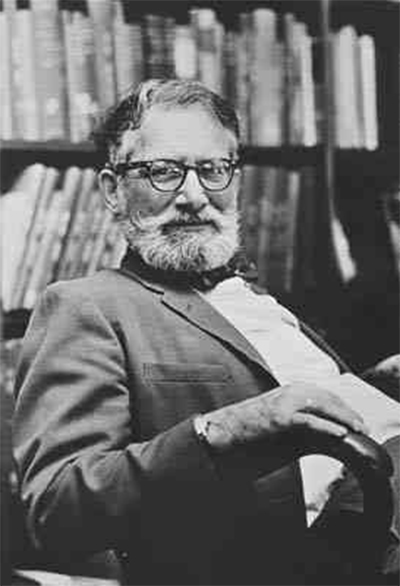
Wolf was a gifted student who graduated at the age of fifteen from the William Penn Charter School in Philadelphia. He continued his secondary education with “three years of polishing” at the Bedales School in England. He credited the classical liberal education he received there for his ability to adapt to diverse academic fields in his work.
Upon returning home in 1930, his father Morris Wolf, a leading Philadelphia lawyer, arranged for him to work at the rare-book firm of A.S.W. Rosenbach, one of the world’s premier antiquarian book dealers. “What a wealth…of treasures I handled…scrutinized, marveled at, and sometimes read,” Wolf recalled, “ranging from a twelfth-century manuscript with carved and painted oak covers…to the manuscript copy of the Declaration of Independence Benjamin Franklin sent to Frederick of Prussia.” “For over two decades I worked in the shadow of Dr. Rosenbach, the boy in the back room” who wrote and edited the firm’s printed catalogues. His prolific and stylistic contributions to the catalogs and other publications earned him the reputation of a respected scholar in the rare-book world.
In 1952 Wolf left the Rosenbach firm and was hired as a consultant to the Library Company of Philadelphia. His survey unearthed innumerable rare books, pamphlets, and prints, unrecorded in the card catalogue and unknown to the board of directors, including works by Benjamin Franklin and Thomas Jefferson, and the copy of Du Pratz’s History of Louisiana that Merriwether Lewis had carried with him during his expedition. His report to the Board was “unequivocally upbeat” – and in 1953 Wolf was hired as Curator, and in 1955 as Librarian, to implement his own recommendations.
Under Wolf the library was moved from its deteriorating, damp facility at Broad and Christian streets to its current location at Juniper and Locust. The massive library of contemporary fiction and biography, acquired to make the library relevant to the public, was discarded. A new cataloguing system for shelving and recording the library’s holdings was introduced. Wolf’s passion for rare-books compelled many prominent Philadelphia families to donate their private collections. He shrewdly purchased books and manuscripts on subjects not in demand in the rare-book marketplace, including books and manuscripts by or about African-Americans. Wolf further established the library’s reputation through lectures and publications, including, rich in prints and photographs, Philadelphia, Portrait of an American City (1975).
Popular exhibitions at the Library Company, curated in large part by Wolf, included “Bibliothesauri: or, Jewels from the Shelves of the Library Company” (1966), “Negro History, 1553-1903” (1969); and “A Rising People: The Founding of the United States” (1976). The accomplishments of Edwin Wolf II, or as he preferred to call himself, “Dinosaurus Bibliothecarius,” were celebrated in “The Wolf Years” (1984), featuring the acquisitions he secured, his exhibitions, and his writings.
Wolf admired, and successfully modeled himself upon, the great librarians he had known, such as Clarence Brigham at the American Antiquarian Society—“consummate rare-book men, autocratic individualists, who in their way made great libraries greater.”
1980
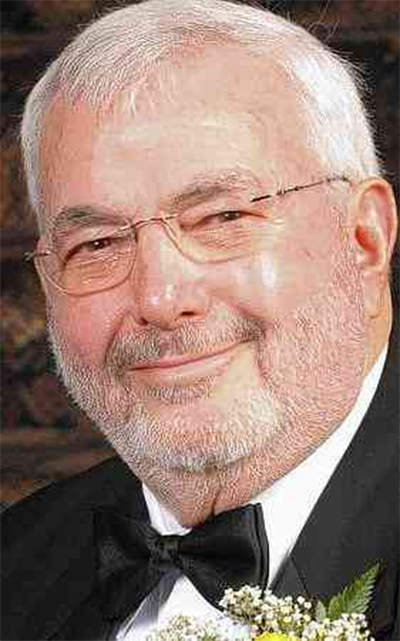
Since then the Foundation has grown to include Dream Village (a 22-acre complex to house families of children who are visiting one of the Orlando theme parks); Dreamlifts (a chartered airplane service to enable children, who cannot stay away from medical care or home for more than 24 hours, to have a daytrip to one of the Florida theme parks); and Progeria Reunions. Hutchinson-Gilford Progeria Syndrome (HGPS) is an insidious rare genetic condition which causes physical changes that resemble accelerated aging in children. The Reunions are week-long getaways for fun and friendship. The foundation has come a long way from when Sample had to take out personal loans to fund the projects. In 1983 Sample retired from the police force to devote himself full-time to his work as president of the foundation.
Like all things that grow, the Sunshine Foundation has had growing pains. In 1987 the foundation came under investigation by the attorney general’s office for mismanagement. No charges were filed. Sample’s defenders asserted that he was a former cop with a big heart, not an accountant. Sample rode out the rocky times, still serving as president. Sample did step down in 2009 and now has the title of President Emeritus. His wife, Kate, serves as president of the foundation.
His legacy speaks for itself. The Sunshine Foundation (now based in Feasterville) has granted the wishes of over 34,500 children, funneling 85% of all donations directly to children’s programs. The American Institute for Philanthropy now lists it as a top-rated charity. Aside from the Philadelphia Award, Sample has received many other awards, including President Ronald Reagan’s Volunteer Action Award and the Please Touch Museum’s Great Friends to Kids Award. Villanova University granted him an honorary doctorate.