
1975
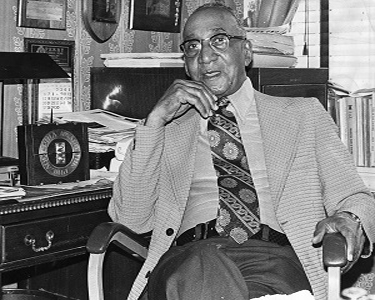
The league primarily supported desegregation, for both students and teachers, in the Philadelphia public school system, as well as another famous, albeit private, Philadelphia educational institution—Girard College. Logan and his organization were instrumental in helping fellow Philadelphia Award winner Ruth Hayre obtain a secondary school teaching position in the district.
Hayre had passed the written exam but when she went before a panel of all-white school principals for the oral exam, she failed. Hayre and Logan challenged their decision and received permission for a retest with a racially mixed group of educators, which she passed.
1975
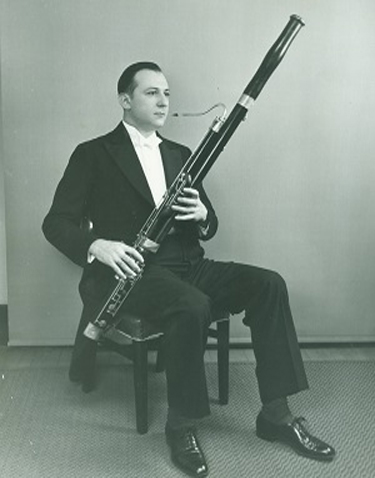
Under Schoenbach’s leadership, the school focused more on charting and evaluating individual student development and improving performance and instruction opportunities.
The number of students increased from nearly 700 to about 3,000. “When Sol arrived, Settlement Music School was…somewhat exclusive,” explained Robert Capanna, who became executive director after Schoenbach, “Sol walked in and said…why not open the doors?”
Schoenbach was a colorful man known for wearing bright vests and claiming to have coined the name Queen Village for the area in South Philadelphia around the music school. While at the Philadelphia Orchestra, he organized its pension fund, revived its children’s concert series, and formed a credit union for the musicians.
1975
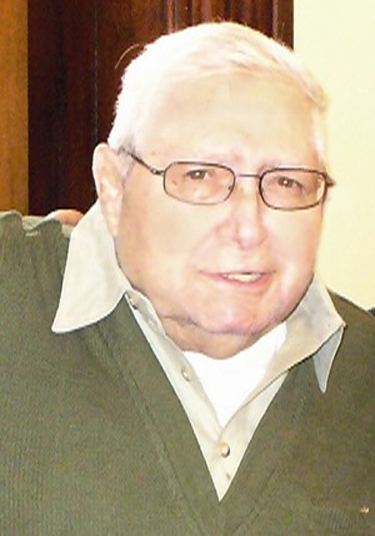
Skid Row is perhaps every large city’s greatest shame, since it brings attention to the city’s failure to provide its most vulnerable citizens solace. But that did not hinder Shandler, even though as the years passed his clientele profile slipped deeper into the depths.
Alcoholism was replaced by heroin addiction, and then “polydrugs”—crack cocaine and alcohol. The addicts became younger, angrier, more aggressive, and much more numerous.
The center, once located at 304 Arch Street, expanded to include three facilities, providing comprehensive rehabilitation and treatment programs for substance abuse. Many of his clients were successful at kicking the habit and turning their lives around; sixty percent of his clients, for example, completed the program at the Washington House facility in 1991. One assumes that those persons who overcame their addition would not consider that small in any sense.
1974
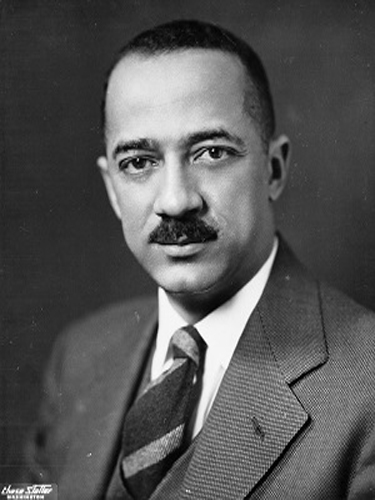
After graduating with a degree in mathematics from Amherst College in 1925 (Phi Beta Kappa and magna cum laude), Hastie taught at the Bordentown Manual School in Bordentown, New Jersey before going on to Harvard University to receive a law degree in 1930. At the time of his graduation, less than one percent of all U.S. lawyers were African American. Hastie moved to Washington DC and joined the black law firm of Houston and Houston (later Houston, Houston, and Hastie). He returned to Harvard, receiving a doctorate of juridical science in 1933.
Hastie was a champion for civil rights during a period when segregation and racial discrimination often went unchallenged. During the early 1930s he argued his first civil rights case, when he represented Thomas Hocutt, an African American who unsuccessfully challenged the whites only policy of the University of North Carolina. Hastie began his federal career as a solicitor for the Department of the Interior in 1933. While at Interior, he penned the Organic Act of 1936, which facilitated the U.S. Virgin Islands transition from Danish colonial law and granted the predominantly black islanders basic American rights, including ending income and property requirements for voting, and extending suffrage to women.
Upon the recommendation of Interior Secretary Harold Ickes, Roosevelt nominated Hastie to the U.S. District Court in the Virgin Islands. After a contentious Senate confirmation hearing, where Southern senators argued that appointment of a black judge would be unacceptable to the people of the Virgin Islands, he was confirmed in 1937. He served at that post until 1939 when he left to become dean of Howard University’s law school.
Roosevelt tapped Hastie again in 1940, for a position at the War Department. He served there till 1943 when he resigned due to the armed forces lack of a commitment to integration. Hastie then wrote several articles condemning segregation in the military. Harold Ickes again recommended Hastie in 1946, this time as governor of the Virgin Islands. After what Hastie described as a “rather vigorous fight,” he was confirmed by the Senate. He served in that capacity until President Truman nominated him for the U.S. Third Circuit Court of Appeals in 1949 (covering Pennsylvania, Delaware, New Jersey, and the Virgin Islands), eventually becoming chief judge. He sat on the bench to June 2, 1971, retiring to Philadelphia--but continuing to serve as a senior judge. He served as a trustee of Temple University.
William Hastie maintained a long standing relationship with the NAACP, as legal counsel in its battles to ensure salary parity between black and white teachers and to end racial segregation in public education and public transportation. Hastie was one of the architects of the legal arguments that culminated in the landmark Brown versus Board of Education decision. President Lyndon Baines Johnson seriously considered Hastie for the supreme court, but decided instead on Thurgood Marshall, who Hastie had mentored when Marshall was a law student at Howard University; the two men had also worked together on civil rights cases. Hastie received the Philadelphia Award of 1974 for his contributions to civil rights.
Lee Arnold
Sources: Obituary, Philadelphia Inquirer, April 15, 1976; Mario A. Charles, “William Henry Hastie (1904-1976),” Notable Black American Men (Detroit, 1999); Peter Wallenstein, “William Henry Hastie,” African American National Biography (Oxford, 2008); Who was Who in America, vol. 7 (Chicago, 1981); Denise Dennis, “William H. Hastie,” Century of Greatness: The Urban League of Philadelphia (Phila., 2002); John Dubois, “Judge Hastie Receives Phila. Award,” Evening Bulletin, Apr. 8, 1975; “Retired Judge Wins the Phila. Award,” Philadelphia Inquirer, April 8, 1975; Francis M. Lordan, “Hastie Wins Phila. Award,” Philadelphia Inquirer, Jan. 26, 1975. The following are collected in Philadelphia Award Records, Series 2 (Recipients & Nominees, 1965-1999), Box 7, folder 15: program, clippings; Series 3 (Award Ceremonies, 1922-2004), Box 17, folder 11: clipping. Photo: Image courtesy Enid M. Baa Public Library & Archives, Government of the U.S. Virgin Islands. Comment: During the 1970s Hastie was critical of black separatism, which he argued would “only lead to greater bitterness and frustration and to an even more inferior status than black Americans now experience.” For him the goal was always full integration into American society, while retaining one’s values in the process.
1973
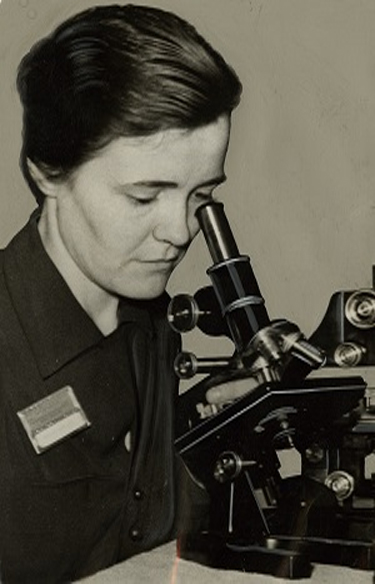
In 1934 Patrick graduated with a PhD in botany from the University of Virginia. The year before Patrick had enlisted as a volunteer at the Academy of Natural Sciences in Philadelphia, having moved there with her husband Charles Hodge, an entomologist. Her first task was to “clean about 25,000 slides,” but a few years later she was appointed curator of microscopy. Originally told that women scientists were not paid at the academy, Patrick worked for a decade there before receiving a salary. In 1947 Patrick founded the limnology (fresh water biology) department at the academy, and served as its director for over four decades.
Patrick’s research on diatoms, single-celled algae, pioneered the methodology by which water pollution is classified and quantified, based on the types and numbers of diatoms in a water system. Her invention, the diatometer, accurately measures these organisms. Her work with diatoms helped the Allies locate a den of German submarines in the West Indies during World War Two. As Patrick tells the story, “The Navy had captured a German submarine and scraped a bunch of goop off the hull…[By analyzing] the diatoms in it, we were able to determine the location of the hideaway.”
Another landmark effort was her 1948 study of the ConestogaCreekBasin, the first comprehensive survey of the effects of pollution on the plants, animals, and microorganisms in a creek or river. Her approach, encompassing all organisms within a water system, was groundbreaking. Subsequently Patrick led innumerable expeditions throughout the world. She was known for her hip boots and white pith helmet, trusted friends as she waded into more than 850 stretches of river in pursuit of her studies.
Her teaching career at the University of Pennsylvania, spanning more than 35 years, was so influential that a Harvard entomologist called her the “den mother of ecology.” Patrick emphasized hands-on experience and had her students wading in the water on Saturday expeditions. Patrick was a prolific scholar, writing several books and over 130 journal articles. She received more than thirty awards for her scientific work.
Patrick counseled Presidents Lyndon Baines Johnson and Ronald Reagan on environmental issues, and worked closely with both government and industry, serving on innumerable boards and advisory councils. Patrick pursued a practical environmentalism, searching for synergy between industry and environmentalists. In her view, “You can’t have society without industry… But on the other hand, industry has to realize that it is a responsible group.” She was the first female and the first environmentalist on the board of the chemical giant DuPont. Her involvement with private industry occasionally led her colleagues to criticize her for being too conciliatory to business interests.
Fifty years into her career, Patrick scoffed at the idea of retiring. “Retire? Cut back? You must be joking.” At age 99, Patrick was still reporting on a daily basis to her office at the Academy of Natural Sciences.
1972
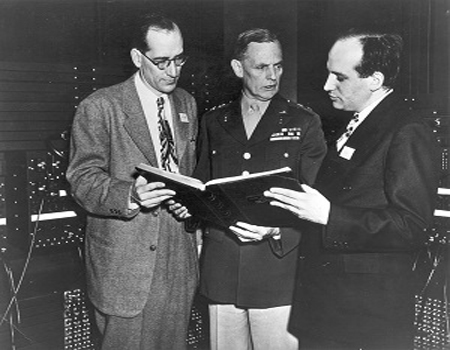
During this 10-week long program, Eckert and Mauchly began sharing their ideas about computers and the need for a high-speed computing machine. These brainstorming sessions continued “in classrooms, in labs, and over coffee and sundaes at the old Linton’s restaurant on Market Street.” Together they began working on a computer system designed for general numerical calculations. In 1942 Mauchly drafted a memo that outlined their ideas, and the following year he wrote a formal proposal which was greeted with interest by the Army, due to the computational advantages it might bring, especially in the area of ballistics. A classified military contract was agreed upon, the venture was named Project PX, and, with the army’s grant of approximately $500,000, the development of the ENIAC computer was officially underway on April 9, 1943.
The ENIAC, an acronym for Electronic Numerical Integrator and Computer, was completed in 1945 after two and a half-years of development, with the assistance of a staff of two hundred. Officially unveiled on February 14, 1946, the ENIAC contained 18,000 vacuum tubes and weighed in at a remarkable 30 tons, covering the entire 15,000 square-foot basement of the Moore School. Controlled by electronic impulses and hundreds of cables, the ENIAC resembled “an old-time telephone switchboard” on a colossal scale. The speed and accuracy of the computer were unmatched, and, most importantly, it was reliable. Mauchly was the brainchild of the ENIAC’s structural design, while Eckert made the theoretical ideas a functioning reality. A brilliant scientist and a brilliant engineer had the creativity and skills which together created the ENIAC.
The “engineering tour de force” that Eckert and Mauchly created revolutionized technology, science, and business, paving the way for the “Information Age” and modern-day computers. Many consider the ENIAC to be the most significant invention of the 20th Century. In the words of Dr. Marvin Wachman, chairman of the Philadelphia Award Board of Trustees when the award was given, “many of the daily endeavors we take for granted today would be unthinkable without computer technology.” He concluded: “It is especially fitting that the Philadelphia community, in which [their] work began, now recognizes their monumental achievement, which in countless ways, affects the lives of virtually everyone on this planet.”
After the development of the ENIAC, Eckert and Mauchly resigned from their positions at the Moore School due to a bitter dispute with the University of Pennsylvania over the patent for the ENIAC; the university believed the profits from the invention belonged to the institution, not to Eckert and Mauchly. They subsequently formed a business in Philadelphia, originally known as the Electronic Controls Company, where they aimed to manufacture computers for sale. Although the company went through a series of mergers and name changes, they became, through their work for this company, co-inventors of the UNIVAC and BINAC, the first commercial computers. Yet their company struggled to compete with better-financed rival companies, which produced commercial computers including the ILLIAC, the Whirlwind, and the MANIAC.
After the purchase of the business by the Rand Corporation in 1950, Mauchly found himself marginalized within the company, due to the secret nature of the company’s military research and their reliance on their own team of researchers. In a plaintive letter to the company that he never sent, Mauchly wrote, “I am unhappy because my usefulness…has become severely circumscribed. An assured income is all very well, but…I have an urge to do things.” In 1959 Mauchly left and formed his own consulting firm, Mauchly Associates, which advised clients on project planning and the uses of computers. Eckert , who remained as a vice president of the company, obtained 87 patents for his various inventions in the course of his lifetime. But it was their role as creators of the ENIAC, the predecessor of all computers, that changed technology forever and made them true visionaries in the eyes of Philadelphia.
1971
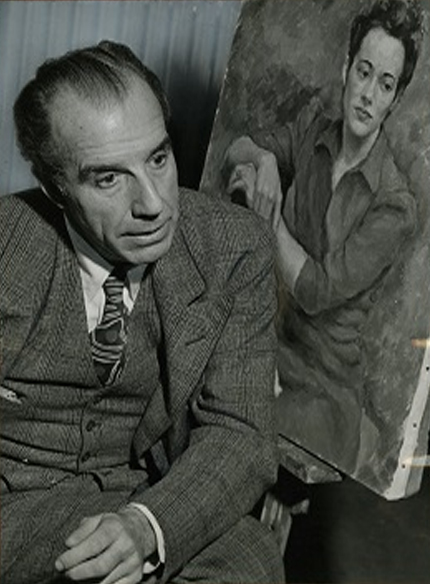
Yet his path as an artist had a couple of detours. He won a Cresson Travelling Scholarship to study art in 1917, but it was withheld due to the War. After serving time in the Navy, he moved to New York City and started off as a commercial artist before winning a second Cresson Scholarship, after which he traveled and studied in France, Spain, Italy, North Africa, Russia and Greece. He won first prize in 1931 at the Carnegie International Exhibition; in 1939 he was awarded a gold medal from the Corcoran Gallery of Art. He taught at the Tyler School of Art (Temple University) from 1940 to 1943. In 1947 Watkins was elected a member of the National Institute of Arts and Letters. He would return to PAFA, this time as an instructor, from 1943 to 1968. In 1958, he was selected as a member of the Cultural Exchange Mission in the Fine Arts to the USSR. His connection with PAFA continued with his serving on their board of directors until his death.
In the art world, he was often, creatively, compared with Cezanne. But, unlike Cezanne, he rejected any identification with expressionism (or other movements). When pressed, he would say that his work was “expressive.” One critic categorized it as: “His canvases are neither direct visual transferences from nature nor arcane cryptograms. They are synergetic.
The power they exude is abrasively generated by the colliding outer and inner worlds he couples through paint.” Even though he was often identified as a portrait painter, he did not regard himself as one. “His attitudes toward a still life, landscape, or figure composition do not differ from his approach to a sitter…He thinks pigmentally…when he talks, he gives the impression that he is squeezing words out of a tube. His palette is his dictionary…His paintings are of paint in the elemental sense that an adobe house is of the earth.”
He was given the Philadelphia Award for not only his painting, but “more importantly for his contribution to art through a quarter century of teaching at [PAFA]…Franklin Watkins’ influence on his art students constitutes one of the major influences of this great artist on the Philadelphia community. This itself is a highly creative gift.”
1970
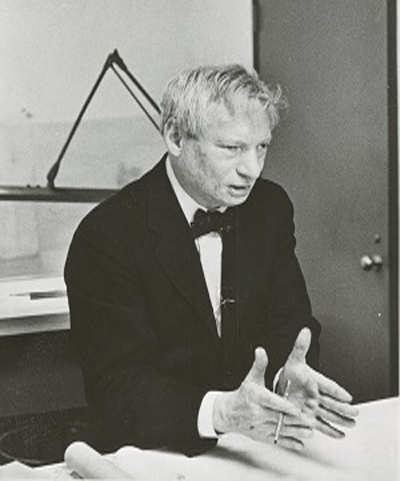
His first major project was as chief of design of the Sesquicentennial Exhibition in Philadelphia in 1925. Kahn then worked in the offices of several architects, including his professor at Penn, Paul Philippe Cret. In 1935 Kahn established his own private practice, but work was not frequent. Kahn was a practitioner of the International Style, a modernist, minimalist approach to architecture, centered on functionality and rejecting the merely decorative.
Kahn began his teaching career at Yale University in 1948, leaving in 1957 to teach at the University of Pennsylvania where he remained until his death. The turning point in his career came as a result of his travels to Europe in the early 1950s, where he studied and admired its medieval buildings and ancient ruins. Consequently, he developed his own approach to architecture, combining modernism and insights garnered from the ancient.
During his teaching career at Yale, Kahn designed the Yale Art Gallery, which won him major recognition and displayed his unique style. Kahn was interested in many fundamental aspects of architecture, which led him to use strong, simple, geometric shapes; utilize natural lighting to advantage; and weigh the importance of the “served” spaces (such as laboratories) versus the “servant” spaces (such as hallways). A major statement of these fundamentals was one of his first projects while at the University of Pennsylvania, the Richards Laboratories, which were completed in 1961.
From this point Kahn’s prominence in the architectural world only grew, both nationally and internationally. Some of Kahn’s more famous works include the Salk Institute in California (1965), the Kimbell Art Museum in Texas (1972), the Exeter Academy Library in New Hampshire (1972), and the new legislative capital in Dacca, Pakistan. His work in the Philadelphia area included dormitories at Bryn Mawr College and Mill Creek Public Housing in West Philadelphia.
In his writings and lectures, Kahn provided an original, ambitious, and philosophical perspective that influenced many architects. He called himself “a maker of spaces,” and described building materials as having needs and desires that it was his job as an architect to fulfill. Kahn was very concerned with the psychological impact of the way a building was configured.
Kahn, the least of whose work had been in the Philadelphia area, expressed surprise when he won the Philadelphia Award in 1970, stating that he would now have to “roll up his sleeves to prove that he was worthy of it.” Mary Bok, widow of award founder Edward Bok, praised Kahn for having “the courage to develop his own potential” under adverse circumstances. Like her husband, Kahn had grown up poor in America, raised by immigrant fathers who had difficulty adapting to American ways.
Kahn died in New York City in 1974, on his return trip from India where he was overseeing a project in Ahmedabad. While many of his projects were in various stages of building at the time of his death, they were all eventually finished. Although he had many plans for other structures, it is in the enduring facades of his buildings that Louis I. Kahn lives on.
1969
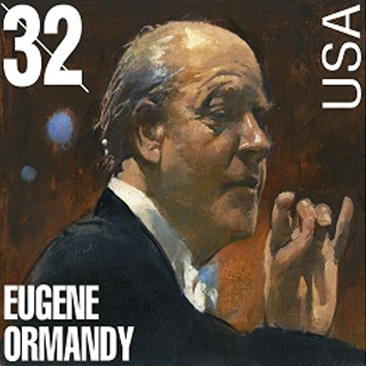
In 1921 Ormandy left Budapest for New York City, expecting to participate in a sponsored tour that never came to fruition. Stranded without money, he learned English, changed his name to Eugene Ormandy, and found a job with the Capitol Theater Symphony, the orchestra of a silent movie palace. Conductor Erno Rapee moved the violinist from last chair to concertmaster within a week. Rapee declared that Ormandy was “much too good to play in a movie house” and “should be playing in Carnegie Hall!”
Ormandy learned conducting under Rapee. When Rapee left the orchestra in 1926, Ormandy took his place as conductor. Ormandy later signed with concert manager Arthur Judson, conducting orchestras on Judson’s radio network. He regularly attended rehearsals by Arturo Toscanini and the New York Philharmonic, improving his skills as a conductor by observing the great maestro perform. When Toscanini cancelled a two-week appearance with the Philadelphia Orchestra, Ormandy jumped at the offer to conduct in his place. Substituting for one of the masters, his exemplary work earned national headlines and a job offer from the Minneapolis Symphony. A delighted Ormandy boarded the train for Minneapolis without stopping to change his concert clothes.
A guest conductor for the Philadelphia Orchestra, Ormandy was named co-director with Leopold Stokowski in 1936 and became sole music director in 1938. Though replacing a popular conductor, Ormandy soon captivated the audience with his “Philadelphia Sound,” a sumptuous string sound created through “broad vibrato and heavy bowing.” Despite a huge repertoire, Ormandy usually conducted from memory, without a music score. Ormandy and the orchestra toured the United States, Europe, Latin America, and Asia. Their tour to China in 1973 was the first by an American orchestra.
Ormandy crafted a family atmosphere within the orchestra, perhaps a result of the absence of children in his own life. (Ormandy’s only two children died in infancy, twelve years apart, from a blood disorder.) Ormandy’s “boys and girls, my children and my family,” as Ormandy once referred to the musicians, benefited in many ways, including interest-free loans to buy rare instruments or the comforting ear of the ‘Queen Mother,’ Ormandy’s second wife, Gretel, when scolded by the maestro. Ormandy’s chosen successor, Ricardo Muti, noted that Ormandy “made the Philadelphia Orchestra into a world-famous orchestra, but he also made it into a family.”
Ormandy’s accomplishments are unrivaled. His 44 years with the Orchestra, from 1936 until 1980, represent the longest tenure of any major-orchestra conductor. His nearly 400 recordings leave a vast and treasured body of work. He premiered new works by many modern composers, including Rachmaninoff, Bartok, and Samuel Barber. Besides honors from foreign governments including Finland, Denmark and France, Ormandy received the Presidential Medal of Freedom from President Nixon in 1970 and was knighted by Queen Elizabeth II in 1976. Former concertmaster Norman Carol noted the preeminence of Philadelphia in foreign cities, “not for our sports teams or our industry, but [for] the Philadelphia Orchestra.” Ormandy won the 1969 Philadelphia Award for that achievement.