
1968
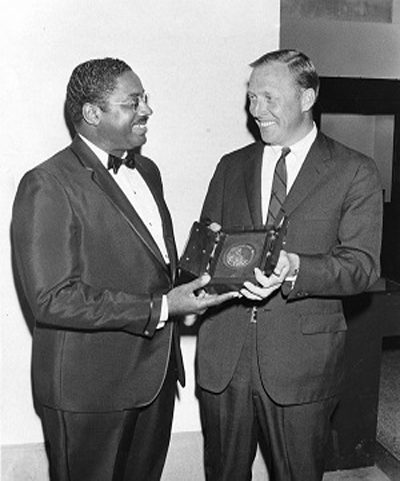
Agraduate of South Philadelphia High School, Foster worked a variety of jobs while pursuing a college education, including shipyard worker, cabdriver, and mail carrier. He graduated from Cheyney State College, and began teaching in Philadelphia public schools in 1949, earning various promotions along the way.
In 1966 Foster became the first black principal of a Philadelphia senior high school, assigned to Simon Gratz with the task of making significant improvements at the school. Gratz was infamous for its city-highest levels of truancy and dropouts, with a graduation rate of only 72%. Only 18 of its graduating seniors from the previous year had pursued higher education. According to Mary James, community coordinator at the school, “Gratz didn’t have a band; it didn’t have [new] uniforms for its sports teams and no one could find the college guidance office before Marcus [Foster] came here.”
Making an immediate impact, Foster burned the school’s hand-me-down athletic uniforms and ordered new ones. Within three years Foster had instituted a band, a choir and an honor society, and built a new gymnasium. He sought to instill a sense of pride in the student body; student chants of “Gratz is for rats” were soon replaced with “Gratz is Great” buttons. Foster worked to bring dropouts back to school, often through personal visits. His “Go for Gratz” campaign re-enrolled 150 dropouts in one day and 225 within a week’s time. School parent Mrs. Arrie Ellis said: “My son would not have graduated if it hadn’t been for Dr. Foster.” Foster instituted a night school for career skills development and persuaded local research laboratories to train students in medicine and biochemistry. He established a nursing training program. By 1968, 180 of the graduates were heading to college, and had received $166,000 in scholarships.
In 1970, Foster became superintendent of the Oakland Unified School District, the first black man to fill that role in any large California school district. Foster took the position to determine whether his developed ideas could “be used to get a whole school system moving and a whole community involved in the schools.” Foster encountered initial resistance from the Black Caucus (a radical group) for their exclusion from the selection process and from black militants “for accusing them of creating racial tensions.” Foster said, “I stepped on some toes and did receive severe threats, but it was just so much talk. It’s more bark than bite.” Foster soon began to make progress, rewarding perfect attendance to counteract high truancy and working to bring peace to the schools.
Foster was murdered on November 6, 1973, by the Symbionese Liberation Army (SLA), a left-wing urban militant group famously known for its kidnapping of Patty Hearst, shortly after their execution of Foster. He was shot as he left work, struck seven times in the back and once in the stomach by cyanide-laced bullets. Ironically, despite all of his work for black students, the SLA viewed Foster as an enemy of black people. They killed him for his alleged support of a student identification card program and for police patrols in school buildings, but in fact he opposed both proposals. Although his life was cut tragically short, Foster’s legacy lives on through the Marcus Foster Education Fund, an organization that promotes community involvement as the best way to transform urban education.
1967
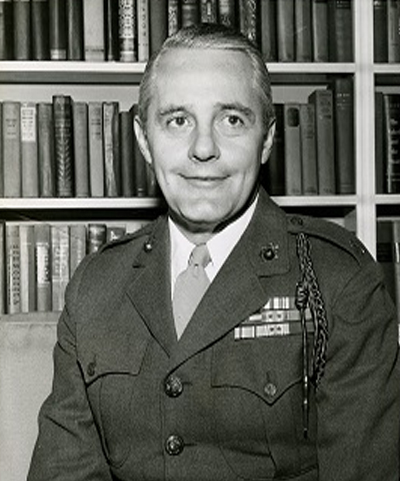
Dilworth and Clark were known as the reform mayors, and set about to end decades of corruption at the hands of the city’s Republican Party machine. He swept into office in 1956 with a 132,000-vote margin and easily won reelection. After resigning to run unsuccessfully for governor, he was appointed to the Board of Education—a nearly universally regarded thankless task. As he did with city government, Dilworth applied the concept of reform to the city schools, updating facilities and increasing teacher pay. He and his superintendent, Mark Shield, helped guide the schools though integration. The “reform” era came to a screeching halt in 1972 when Frank Rizzo became mayor. In anticipation of that day, Dilworth resigned from the school board and resumed the practice of law.
But it was his time as mayor which left a more lasting impact. During the “Reform Decade” of Clark and Dilworth, Philadelphia tore down the “Chinese wall” of elevated tracks, which bisected much of Center City. The city expanded the airport, and created a planning department, the Philadelphia Housing Authority, and the Philadelphia Redevelopment Authority. Philadelphia became the first major city to fluoridate its water in, as one reporter wrote, “an era when fluoridation was thought to be a Communist plot.”
One of the most shocking things Dilworth did was move his family from the fashionable Rittenhouse Square neighborhood to the (then) unfashionable Society Hill district. He hoped that middle-class whites would follow, and they did. (So much so, that today a good number of Philadelphians think the “society” in Society Hill refers to social class, instead of William Penn’s land grant to London’s Free Society of Traders in 1683.) Dilworth was once described as “Jay Gatsby in reverse: a man who started out as a legitimate upper-class WASP, then spent his life trying to live that circumstance down…he could never take seriously the idea that wealth was a virtue and not an accident of birth.”
He was, as they say, a character. Dilworth’s time was an era where one could describe an adversary as “that mountain of lard,” as he indeed once did, and not really be any worse off, politically, for having done so. When another opponent refused to debate him, Dilworth had his own daughter put on a sandwich board, walk back and forth in front of the proposed debate site, and proclaim: “Why won’t you debate the issues with my father on TV?” On the doomed Andrea Doria, as he and his wife were preparing to head for the lifeboats, he wanted to get his socks on first. His wife replied: “For God’s sake, forget your socks so we can get off this sinking ship.”
An editorial cartoon ran shortly after Richardson Dilworth’s death. It was of an angel announcing that at the gate was “A Mister Richardson Dilworth…with a list of reforms.”
The Dilworth Family Papers are at The Historical Society of Pennsylvania
1966
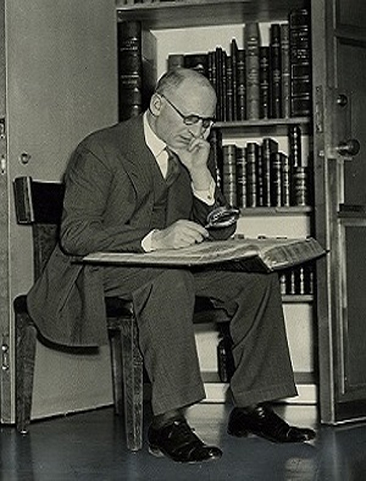
Yes, Lessing Rosenwald was no mere art hoarder; in fact, he really was not an art hoarder at all. At any given time, items from his prized collection of prints and rare books could be found at up to sixty national and international exhibits. At the time of the Award, his print collection numbered 25,000 and included works by Rembrandt, Picasso, Munch, and Matisse. His prized book collection of some 2,500 titles included the first illustrated Bible (the Giant Bible of Mainz), published in German in 1475; Epistolae et Evangelia (1495)—known as the “finest illustrated book of the fifteenth century”; and a “Baedeker-like guide book to Rome” (1488). He believed “that a work of art that is never seen is little better off than one that has never been created.” In 1943, Rosenwald announced that (upon his death), he was leaving his rare books to the Library of Congress and his prints to the National Gallery of Art.
In the meantime, his magnificent collections were available for public perusal at the Alverthorpe gallery, the fireproof wing of his mansion in Jenkintown. This perusal was by appointment only, but appointments were made steadily at first and gradually came in fast and furious, as many thousands visited the gallery. Heir to the Sears & Roebuck fortune, Rosenwald opened Alverthorpe in 1939, shortly after he retired from his position as chairman of the board of Sears and Roebuck, in order to devote himself full-time to his collections and philanthropy.
When at home, Rosenwald often greeted visitors to the gallery, shook their hands, inquired about their visit, and joked with them; he was thrilled by the great interest in his collection, not only from art connoisseurs and scholars, but from groups of adults and school children who arrived with little knowledge and left stimulated by what they had seen.
Rosenwald received the Philadelphia Award, not for amassing a great collection, but for making that collection available to the public, especially at Alverthorpe. He was also honored for his “dedicated intelligence,” which he had demonstrated by his work developing the print and drawing department of the Philadelphia Museum of Art, expanding the rare book department of the Free Library, and founding the Print Council of America.
1965
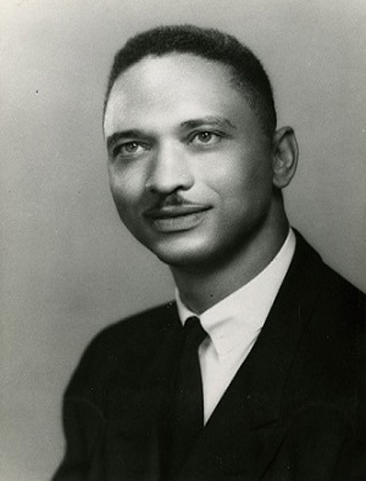
Sullivan grew up poor in West Virginia, reared by his devoutly Christian grandmother. He graduated from West Virginia State College, and earned a degree from Union Theological Seminary in New York City. In 1950 Sullivan became pastor of ZionBaptistChurch in North Philadelphia. Shortly afterwards, Sullivan founded the Citizens Committee Against Juvenile Delinquency and its Causes, which organized people in low-income black neighborhoods to clean up their blocks, supervise teenagers, and protest nuisance bars.
In 1960 Sullivan and other black ministers founded 400 Ministers, to combat job discrimination. He estimated that in Philadelphia less than 1 per cent of private sector jobs involving contact with customers were held by African Americans; these jobs included clerks, bank tellers, and sales people. Few blacks held skilled factory jobs. 400 Ministers organized boycotts of Tastykake, Sun Oil Company, and five other businesses, forcing those companies to change their practices. “After the Tasty victory,” Sullivan recalled, “black people were walking ten feet tall in the streets of Philadelphia.” Numerous companies avoided boycotts by reaching agreements with the group.
In 1964 Sullivan opened the Opportunities Industrialization Center to provide vocational training for black youths. The center soon featured eight training programs, including sheet metal working, electronics assembly, and restaurant services. With corporate, foundation, and federal funding, the OIC grew into a national job training organization, operating in 150 cities by 1970.
Sullivan devised the 10-36 Plan, where parishioners would donate $10 every month for 36 months (for 16 of those months the money would go to a community nonprofit, the last 20 months to start a black-owned business). After their contributions, the parishioners were voting shareholders in the business. The largest enterprise the plan launched was Progress Plaza, a shopping complex near Temple University.
Later, he gave his name to an early driving force against the Apartheid regime in South Africa, the Sullivan Principles. These principles required international companies doing business in South Africa to ignore the race segregation laws, provide equal pay for equal work, set up training programs, and promote non-whites to supervisory positions. While companies such as Ford and GM (where Sullivan was a board member) were quick to sign on, the principles themselves had mixed success and were abandoned in 1987, when Sullivan endorsed a full economic boycott of South Africa. In 1999 Sullivan adapted the principles internationally as the Global Sullivan Principles of Corporate Social Responsibility.
In 1988 Sullivan retired as pastor of Zion Baptist, in order to devote himself to international work. He organized summits that brought together Africans and African-Americans. At the Millennium Summit in Ghana, over 3,500 attended, including the leaders of 19 African nations.
Sullivan was a tireless proponent of self-help. He inspired and assisted thousands of African-Americans in starting up businesses and learning skills to improve their economic well being. As Sullivan explained, “I long to see the kingdom of God a reality in the everyday lives of men. Some people look for milk and honey in heaven, while I look for ham and eggs on earth.”
Sullivan received honorary doctorates from over 50 institutions. President Bush awarded him the Medal of Freedom in 1992. Bill Clinton presented him with the Eleanor Roosevelt Award in 1999.